
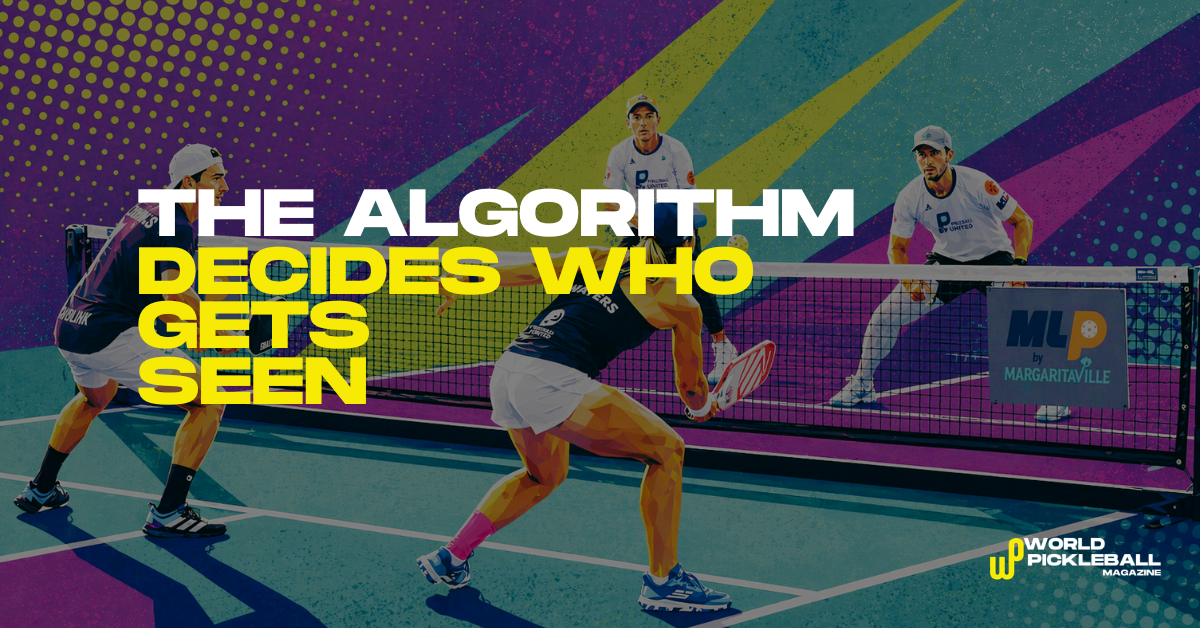
Professional pickleball is no longer shaped only by what happens on court. As tours and teams turn to automated highlights, visibility is becoming a defining part of how the sport works.
- AI tools are now producing match highlights within minutes, not hours
- Teams are prioritising speed and volume of content to stay visible
- Exposure is becoming a competitive advantage alongside performance
From match to clip in minutes
Pickleball matches are no longer just being played.
They are being cut, reframed, and distributed within minutes.
That shift is being driven by tools like AeroAI, a startup now working across the professional pickleball tours, including both the PPA Tour and Major League Pickleball. Its software takes full match footage and turns it into short, vertical highlight clips automatically, removing downtime and tracking the ball to keep the action centred on screen.
For teams like the New Jersey Fives, the change is immediate. Instead of waiting hours for edited content, they can now produce multiple 45 to 60-second clips from each match, ready for social platforms almost in real time.
This is not a small upgrade. It changes how the sport is seen.
Visibility is no longer a by-product
For most of pickleball’s rise, content followed the action.
Matches happened first. Clips came later.
That order is starting to reverse.
With automation removing the cost and time barrier, content is becoming part of the structure of the sport itself. Teams are no longer asking what is worth posting. They are asking how much they can post, and how quickly.
If you’re following how the global game is shifting week by week, the World Pickleball Report breaks this down every Wednesday.
The result is a different kind of competition. Not just for wins, but for attention.
The algorithm as part of the system
In pickleball, matches are still decided on court. Careers are increasingly decided off it.
The players who appear most often in clips become the ones audiences recognise. Recognition leads to following. Following leads to commercial value.
This is where the shift becomes structural.
Exposure is no longer a bonus. It is part of how players move through the sport.
And unlike results, exposure is not evenly distributed.
It depends on who is featured, how often, and how well their moments translate to short-form video. A single rally, framed correctly and delivered quickly, can travel further than an entire match result.
This is already visible across leading names on the global player rankings, where those with strong digital presence often build faster commercial profiles alongside performance.
Why this matters now
Pickleball has always suited short-form content. The compact court and quick points make it easy to capture and easy to watch.
What has been missing until now is scale.
Tools like AeroAI remove that limitation. They allow leagues and teams to flood platforms with content, keeping the sport constantly visible and constantly circulating.
That visibility feeds directly back into the system. Sponsors follow attention. Players follow opportunity. Teams follow reach.
The loop becomes tighter.
Across recent pickleball industry developments, this shift towards content-led growth is becoming one of the defining patterns shaping the professional game.
For a clearer view of where the sport is heading each week, you can join the World Pickleball Report here.
What this leads to
The next phase of pickleball will not just be faster or more professional.
It will be more visible, more immediate, and more selective about what gets seen.
The sport is still played point by point.
But it is increasingly experienced clip by clip.
Further Reading
- Latest pickleball news from around the world
- Tournament coverage and results
- Rankings and player profiles
- Regional pickleball coverage

Chris Beaumont
Founder and Editor-in-ChiefChris Beaumont is the founder and Editor-in-Chief of World Pickleball Magazine. Chris follows the global game closely, reporting on the latest news, developments, stories and tournaments from all five continents. He also hosts the World Pickleball Podcast, interviewing people at…
View All Articles →

