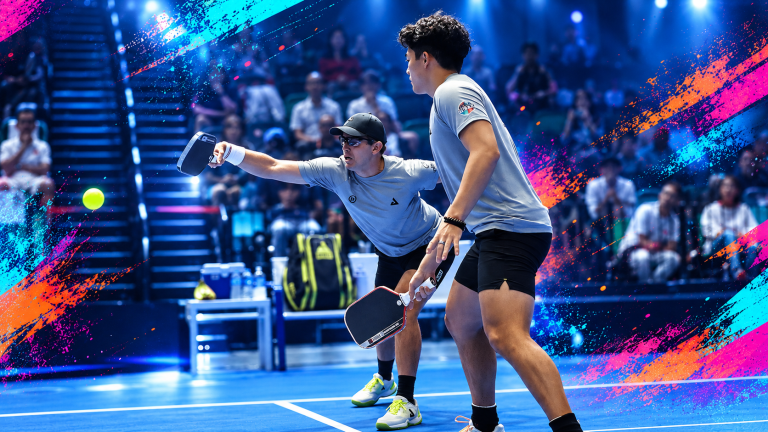

Brian Tran controlled the men’s draw from start to finish. Selina Turulja waited until the final to take control of the women’s. That contrast defines what actually happened at Tweed Heads.
- Brian Tran won the men’s title with a dominant, controlled final performance
- Selina Turulja overturned Andie Dikosavljevic after being tested earlier in the draw
- The two singles titles were decided at completely different moments of control
The moment that mattered came last
Selina Turulja did not control this tournament until the final set she played.
By then, it was the only moment that mattered.
The men’s draw at Tweed Heads had already settled into shape. The women’s had not. One moved towards clarity early. The other held onto uncertainty until the end.
That difference decided everything.
The men’s draw closed early
The structure of the men’s bracket became clear well before the final.
Brian Tran progressed with control, absorbing brief pressure but never losing authority over matches. Others around him, including Mitchell Hargreaves and Sahil Dang, had moments of resistance, but the overall pattern held.
By the semi-finals, the draw felt settled.
Even when Harrison Brown disrupted the rhythm for a spell, Tran’s response was immediate. The final followed the same pattern. A fast start, scoreboard pressure, and no way back.
He closed the match 11–1, 11–7. No swing. No late uncertainty. The title was effectively decided early.
If you’re following how the global game is shifting week by week, the World Pickleball Report breaks this down every Wednesday.
The women’s draw refused to settle
The women’s side unfolded differently.
Andie Dikosavljevic dominated the early rounds. A controlled quarter-final was followed by a brutal semi-final performance, beating Sarah Burr 11–0, 11–0.
It looked settled.
It wasn’t.
Turulja’s route had been quieter. Efficient, but not overwhelming. She had already been forced to manage tighter matches and longer rallies, including a controlled semi-final win over Kaitlynn Hart.
That difference in experience under pressure became decisive.
Where the final turned
At 9–9 in the opening game, nothing had been decided.
Dikosavljevic had controlled the tournament to that point. Turulja had spent the entire draw adjusting to matches that refused to settle.
The next few points changed that.
Turulja edged the first game, lost the second heavily, then reset again. When control slipped, Dikosavljevic could not reassert it in the same way she had earlier in the day.
Turulja could.
She closed the match 11–7 in the third.
What this means
At the highest level, control is not just about how quickly you take it.
It is about whether you can take it back.
The men’s draw rewarded early authority. The women’s draw rewarded the ability to absorb, adjust, and close. Both are forms of control, but they are not equal under pressure.
One removes doubt. The other survives it.
Only one of those can be tested in a final.
Two titles, two different paths
According to the official PPA Tour event structure, both draws followed the same format. The outcomes could not have been more different.
One champion never let go.
The other knew exactly when to take it.
For a clearer view of where the sport is heading each week, you can join the World Pickleball Report here.
Further Reading
- Latest pickleball news from around the world
- Tournament coverage and results
- Rankings and player profiles
- Regional pickleball coverage

Chris Beaumont
Founder and Editor-in-ChiefChris Beaumont is the founder and Editor-in-Chief of World Pickleball Magazine. Chris follows the global game closely, reporting on the latest news, developments, stories and tournaments from all five continents. He also hosts the World Pickleball Podcast, interviewing people at…
View All Articles →