

Enjoying our coverage?
The March 2026 issue of World Pickleball Magazine is now live, featuring global league developments, tournament analysis, exclusive interviews, and stories from across the international pickleball community.
Follow @worldpickleballmagazine on Facebook and Instagram for daily pickleball news, and listen to the World Pickleball Podcast on Spotify, iTunes, and other major podcast platforms.
A Defining Shift as American Stars Head to Hanoi
The release of the official seedings for the MB Hanoi Cup confirmed a significant shift in professional pickleball. For the first time, the undisputed heavyweights of the American game are travelling to Southeast Asia to compete. Anna Leigh Waters is preparing to make her international debut, while Ben Johns returns to the region hunting for his first Asian gold medal. Their presence in Vietnam alongside other top-seeded athletes like Federico Staksrud and Christian Alshon is a clear statement of intent. The question is no longer whether the American elite will play overseas. The question is what their participation means for the future structure of the sport.
From Domestic Dominance to Global Opportunity
For years, the North American professional circuit functioned as an enclosed ecosystem. The prize money, sponsorships, and fiercest competition were entirely concentrated in the United States. Elite players had very little incentive to board a long-haul flight when they could earn a comfortable living domestically. However, the rapid expansion of PPA Tour Asia has altered the equation.
Last year, players such as Connor Garnett and Sahra Dennehy found considerable success at events in Fukuoka and Hangzhou. They proved that the Asian circuit was highly organised and highly competitive. Now, the absolute top tier of the sport is following their lead. This development matters because it signals the transition of pickleball from an American phenomenon to a genuinely global professional tour.
Ranking Points, Prize Money, and Pressure to Travel
The MB Hanoi Cup is offering 1000 PPA Ranking points to the victors. This mathematical reality is impossible for top players to ignore. As the global ranking system becomes more integrated, athletes cannot afford to skip high-value international events and allow their rivals to accumulate points uncontested. Securing the world number one spot now requires a willingness to travel.
The financial rewards in Asia are also beginning to match the physical toll of international competition. The tournament in Vietnam boasts a prize pool of up to US$300,000, while high-profile exhibition events continue to elevate the commercial ceiling. The upcoming JOOLA Titans Tour, featuring Andre Agassi and Ben Johns, reflects the growing scale of investment flowing into the region.
Testing Themselves Against a Rising Global Field
The American elite are fully aware that the rest of the world is catching up. Competing across Asia forces players to adapt to unfamiliar playing conditions, heavy humidity, and evolving tactical styles. Johns himself experienced this first-hand, securing only silver and bronze medals during his 2025 appearances on the Asian circuit.
For players accustomed to dominance at home, these environments provide something increasingly rare: uncertainty. That uncertainty is precisely what drives improvement. The decision to travel is not simply financial or strategic. It is competitive necessity.
What This Means for the Global Game
The immediate consequence of this shift is the validation of the global ranking system. A world ranking will soon reflect worldwide performance rather than North American dominance alone. For tournament organisers, this creates a far stronger proposition when attracting sponsors, broadcasters, and new audiences.
At a grassroots level, the impact is even more significant. Players in emerging markets will now be able to watch the sport’s elite up close. Observing the movement, decision-making, and composure of athletes like Waters and Johns accelerates development in a way that no training programme can replicate.
The Emergence of a True International Tour
As the Asian circuit continues to expand, professional players will begin to structure their seasons differently. Much like tennis professionals plan around global swings, pickleball athletes will soon incorporate dedicated Asian legs into their schedules. This may include extended stays in the region to properly adapt to time zones, climate, and competitive rhythms.
With that shift will come new contenders. The rising standard of competition makes it increasingly likely that players from the Asia-Pacific region will break into the global top tier in the coming years.
The World Pickleball Magazine Verdict
The era of American isolationism in professional pickleball has come to an end. The commitment of the sport’s leading names to the MB Hanoi Cup confirms that the path to sustained dominance now runs through the international circuit.
The real story is not just who wins in Vietnam, but how those results reshape the global hierarchy. For the first time, pickleball’s ranking system is beginning to reflect a truly worldwide game.
Stay ahead of the global game by signing up for the World Pickleball Report, delivered every Wednesday.
Further Reading
- Latest pickleball news from around the world
- Tournament coverage and results
- Rankings and player profiles
- Regional pickleball coverage
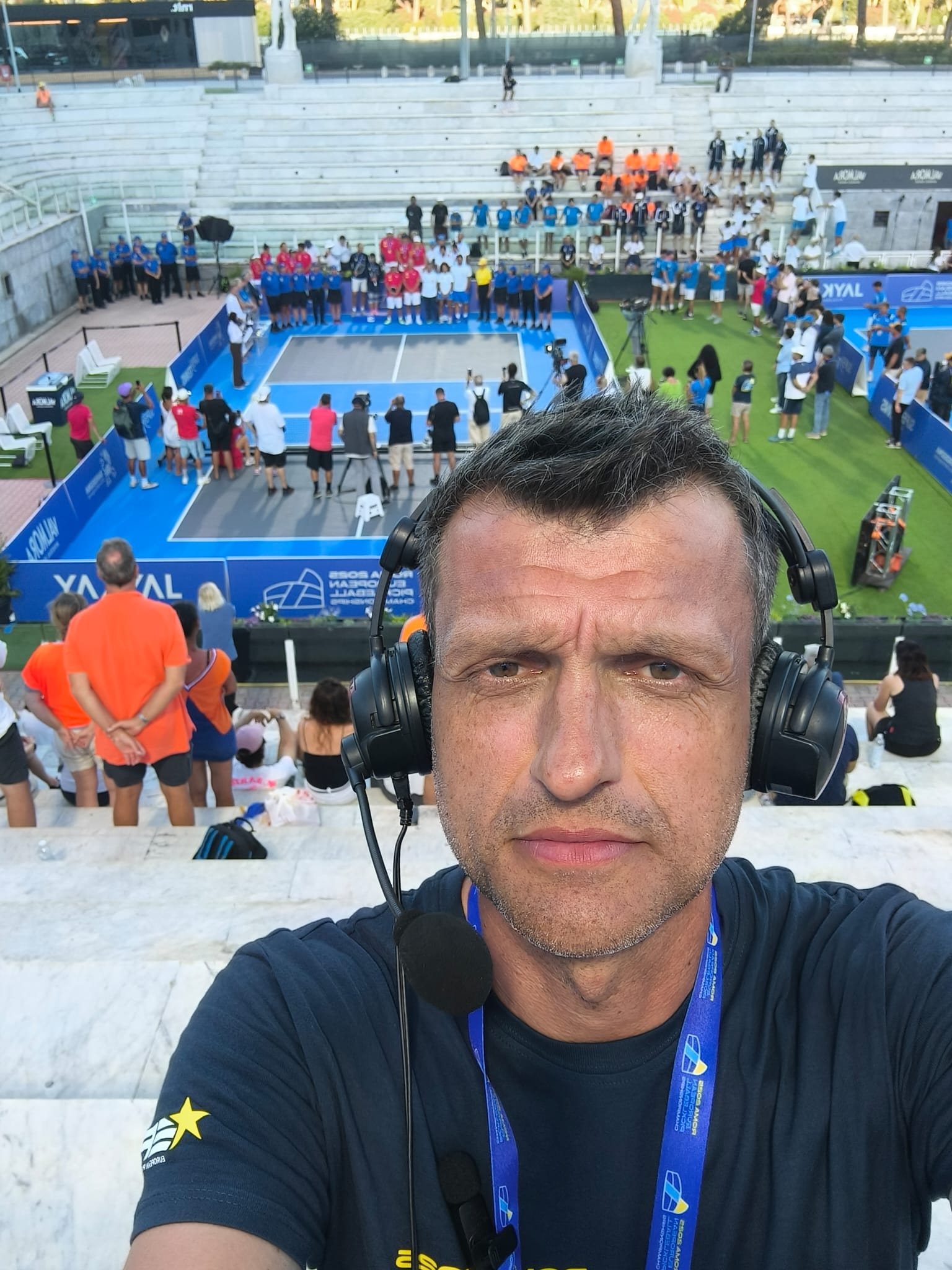
Chris Beaumont is the founder and Editor-in-Chief of World Pickleball Magazine. Chris follows the global game closely, reporting on the latest news, developments, stories and tournaments from all five continents. He also hosts the World Pickleball Podcast, interviewing people at all levels of pickleball. Chris is also an avid player, currently struggling to make the breakthrough from 4.0 to 4.5.