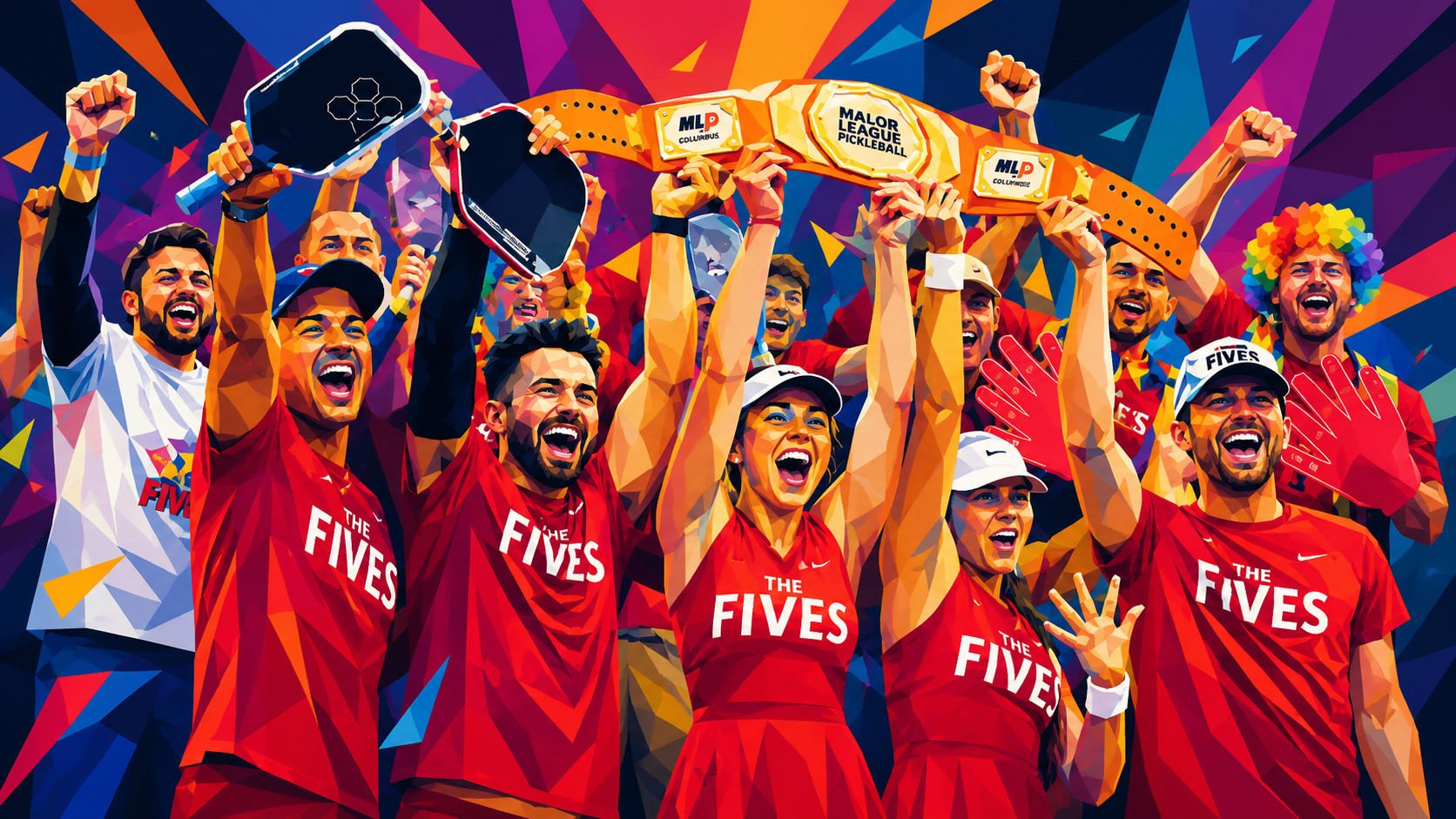
The New Jersey 5s left Columbus with the trophy, but the most significant takeaway from the weekend was not the result itself. It was the growing sense that New Jersey may have become the first Major League Pickleball franchise to solve the roster-building puzzle everyone else is chasing.
Key Takeaways
- New Jersey’s victory highlighted the value of roster balance rather than star power alone.
- A fully healthy Will Howells transformed the team’s men’s doubles strength and removed a major vulnerability.
- Columbus exposed a growing gap between MLP’s genuine title contenders and the rest of the league.
The Arms Race That Never Ends
For much of the past year, Major League Pickleball has resembled an arms race.
Teams have chased stars.
Owners have chased headlines.
Front offices have chased blockbuster trades.
Every major move has been framed as the one that might finally tilt the balance of power.
Then Columbus happened.
And New Jersey delivered a reminder that the smartest roster construction may ultimately matter more than the most expensive roster construction.
The 5s did not simply win MLP Columbus.
They controlled it.
By the time the tournament concluded, the conversation had shifted from whether New Jersey were vulnerable to whether anyone else currently possesses a complete answer for stopping them.
That is a very different discussion.
The Four Pieces Fit
The defining characteristic of New Jersey’s roster is not individual brilliance.
It is the absence of obvious weakness.
Anna Leigh Waters remains the most influential player in professional pickleball and continues to provide a competitive advantage few teams can match.
But Columbus demonstrated that New Jersey are no longer dependent on her carrying the franchise.
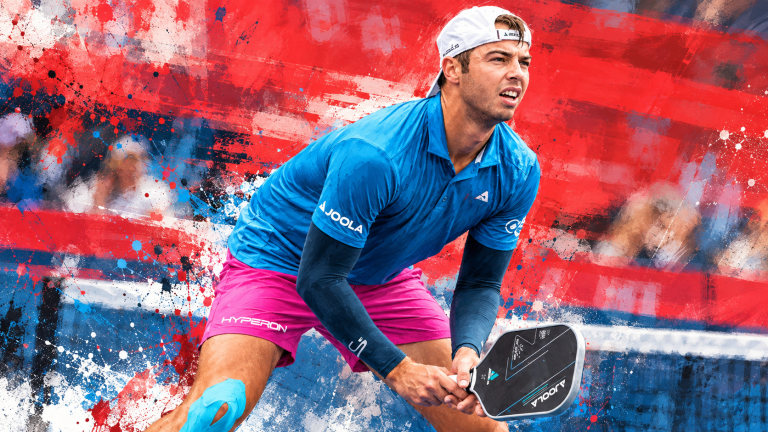
The return of a fully mobile Will Howells may have been the tournament’s most important development.
After questions surrounding his movement and fitness following Dallas, Howells looked transformed in Columbus. The ankle brace was gone. The hesitation was gone.
More importantly, New Jersey’s men’s side suddenly looked elite again.
Alongside Noe Khlif, Howells provided the balance required to ensure opponents could no longer focus their tactical planning solely on the women’s side.
That matters.
Because every championship team eventually reaches the same objective.
Remove the weak point.
New Jersey appear to have done exactly that.
Then there is Jorja Johnson.
Her acquisition increasingly looks like one of the most significant personnel decisions in recent MLP history.
Johnson brings more than talent.
She brings flexibility.
She creates matchup options.
She allows New Jersey to adapt pairings and strategies depending on opponents.
Championship teams rarely rely on one dominant combination.
They create multiple ways to win.
That is increasingly what New Jersey looks capable of doing.
The Franchise Decision That Keeps Looking Bigger
One storyline continues to grow in significance with every tournament.
Jorja Johnson is in New Jersey because New Jersey decided she was worth fighting for.
The irony is difficult to ignore.
Dallas Flash owner Mark Moulton previously allowed Johnson to leave before later attempting to bring her back.
The 5s stepped in aggressively and secured the deal instead.
At the time, it was viewed as a major move.
Columbus suggested it may have been a franchise-defining one.
The modern professional game is increasingly shaped by decisions made in boardrooms rather than on courts.
Player movement matters.
Roster construction matters.
Long-term planning matters.
Johnson’s role in New Jersey’s success is becoming a compelling example of why.
Why St Louis Still Matters
No team benefited more from New Jersey’s dominance than St Louis Shock.
Because the Shock remain the measuring stick.
Their second consecutive runner-up finish should not be viewed as failure.
Most franchises would happily accept that position.
The issue is expectation.
This is a roster built to win championships.
The arrival of Anna Bright only increased those expectations.
Yet Columbus highlighted an uncomfortable reality.
Talent accumulation and roster construction are not always the same thing.
Hayden Patriquin‘s uncharacteristic unforced errors proved costly in key moments throughout the event.
Other teams experienced poor performances too.
The difference is that title contenders are judged more harshly.
St Louis remain one of the best teams in Major League Pickleball.
The concern is that New Jersey currently appear more complete when pressure intensifies.
That is a difficult gap to close.
The Moment Columbus Will Remember
The most memorable story of the weekend may not have involved either finalist.
Palm Beach Royals player Grayson Golden delivered one of the most remarkable moments of the season by winning a Dreambreaker just five months after suffering two strokes.
Professional sport often becomes consumed by rankings, contracts and results.
Golden’s performance provided a reminder of something far more important.
Perspective.
Regardless of how the season unfolds, it may remain one of the defining moments of MLP 2026.
Are We Watching MLP Split Into Two Leagues?
Perhaps the most important question emerging from Columbus concerns the league itself.
At the start of the season, optimism surrounded a broad range of franchises.
That optimism is beginning to narrow.
New Jersey.
St Louis.
Los Angeles.
Columbus.
Brooklyn.
Those increasingly resemble the teams capable of winning a championship.
Everyone else appears to be chasing them.
That does not mean surprises cannot happen.
Sport rarely follows predictions perfectly.
But Columbus reinforced the feeling that a genuine separation is beginning to emerge between the league’s contenders and the rest.
The challenge for MLP is ensuring that gap does not continue to widen.
What This Means
The easiest conclusion from Columbus is that New Jersey won another title.
The more interesting conclusion is that they may have established the blueprint other franchises are now trying to copy.
Elite women’s talent.
Elite men’s talent.
Flexibility.
Depth.
No obvious weaknesses.
That formula sounds simple.
Building it is considerably harder.
Columbus was supposed to tell us whether New Jersey were vulnerable.
Instead, it answered a different question.
For the first time this season, one team looked complete.
Everyone else is now trying to figure out how to build one.
Further Reading
- Latest pickleball news from around the world
- Tournament coverage and results
- Rankings and player profiles
- Regional pickleball coverage

Chris Beaumont
Founder and Editor-in-ChiefChris Beaumont is the founder and Editor-in-Chief of World Pickleball Magazine. Chris follows the global game closely, reporting on the latest news, developments, stories and tournaments from all five continents. He also hosts the World Pickleball Podcast, interviewing people at…
View All Articles →