By Lee Whitwell
Pickleball is fun. Effortlessly addictive, in fact. It brings people together, gets us moving, and gives us a place to play again — something most of us didn’t realise we were missing.
But beneath all of that, there’s something else going on.
Key Takeaways
- The ‘Chimp Model’ from sports psychology explains why pickleball players make emotional decisions under pressure that override rational play
- Understanding the emotional brain’s influence on on-court behaviour is key to managing frustration, nerves, and competitive anxiety
- Practical mental strategies can help players maintain composure and make better decisions during high-pressure points
This article features in the May 2026 issue of World Pickleball Magazine. For the full collection of features, interviews, coaching insights and global coverage, download the complete magazine here.
Because how we play is a direct reflection of how we handle life. Same reactions. Same patterns. Same triggers. And the truth is, most people don’t even realise it.
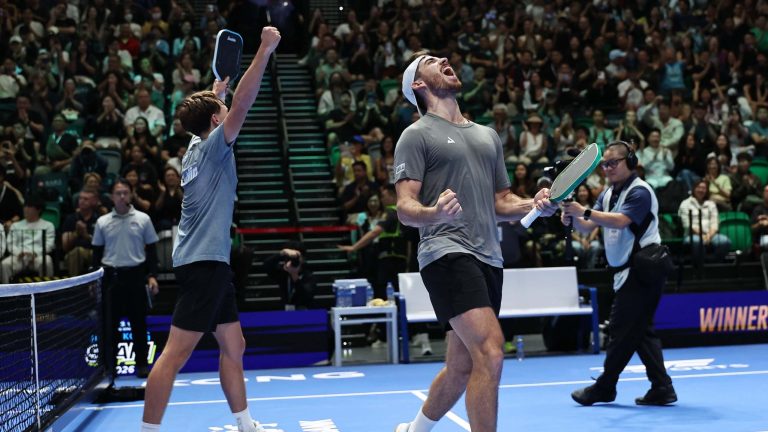
We’ve all seen it. The paddle slam. The exaggerated sigh. The “sorry” after every missed shot, like they’re apologising for existing. The look at a partner that says that was definitely your fault without actually saying it. And the best part? Every single one of us has been all of those people.
Because here’s the truth no one really talks about. It’s not about the ball. It’s not about the score. It’s not about that one dink you just sent into the net.
It’s about your brain.
More specifically, the part that loses its mind when things don’t go your way.
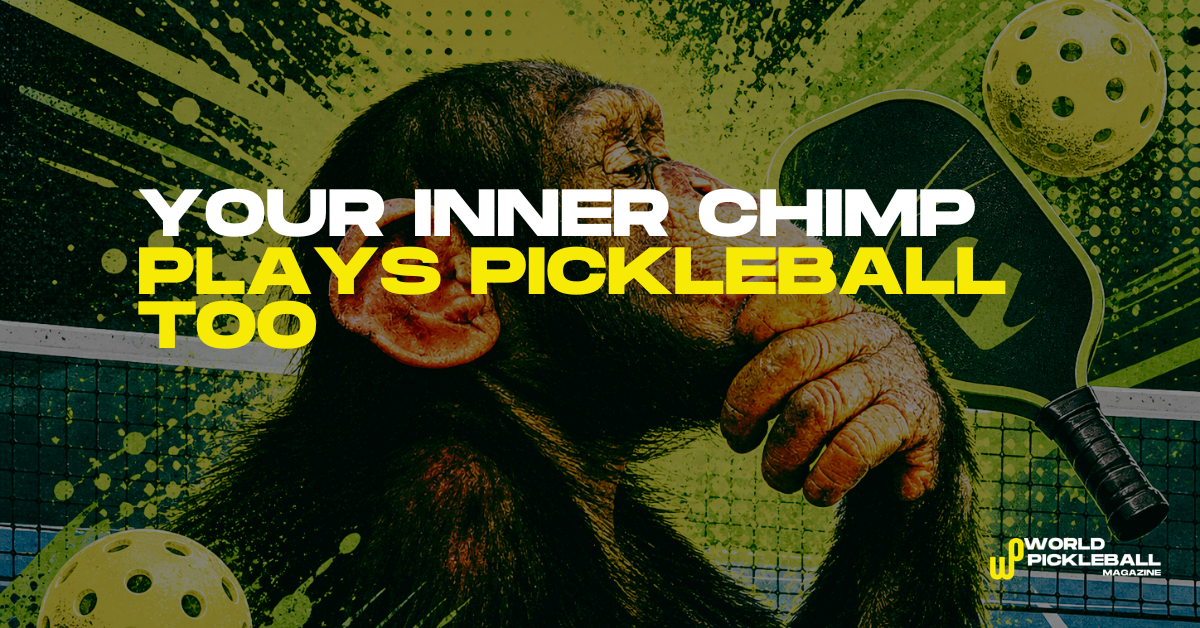
There’s a concept from The Chimp Paradox by Steve Peters that explains this perfectly. He calls it the chimp. The emotional, reactive part of your brain that doesn’t care that you said you were “just here for fun.” Your chimp cares about one thing: don’t look stupid, don’t lose, and don’t be judged. So when you miss an easy ball, it takes over.
You can see it everywhere. The spiraler who misses one shot and suddenly the next five points are a full-blown identity crisis. The over-apologiser saying “sorry” on repeat, not because they’re polite but because they’re trying to soften the blow of perceived failure. The blamer — the ball was bad, the sun was in their eyes, their partner didn’t move — anything but sitting with the discomfort of I messed that up. The silent one, no eye contact, just internal combustion while pretending everything’s fine. And then the classic — “I’m fine.” They are, in fact, not fine.
None of this is about skill. It’s about how we handle pressure, discomfort, and that quiet fear that people might be judging us… over a game with a plastic ball.
You miss an easy putaway. Silence. Your shoulders tighten, your partner avoids eye contact, and suddenly that one shot feels like it defined the last five minutes of your life. That’s not the shot. That’s the story you just told yourself about it. Most people think they’re reacting to the point. They’re not. They’re reacting to what the point means to them.
The Chimp Inside Your Game
And here’s where it gets deeper.
When we were young, we played without thinking. We played until the street lights came on. There were public service announcements asking parents if they knew where their kids were, because we were just out there playing. Free. No pressure, no image to protect, no internal narrative running in the background.
Somewhere along the way, we grew up. We became more aware, more guarded, more concerned with how we’re perceived. Our world got smaller. Our play got replaced with responsibility. And then along comes pickleball — a sport that somehow gives us permission to play again.
But we don’t show up as blank slates. We show up carrying things. Work stress that doesn’t switch off. Family responsibilities. Relationships that are thriving or quietly falling apart. Divorce. Loss. Grief that hasn’t quite settled. The uncertainty of starting over somewhere new. The pressure to hold it all together while, underneath it, something feels like it’s shifting.
And most of the time, we manage.
Until a missed shot cracks the surface.
Suddenly it’s not just about the point. It’s frustration that was already there. Pressure that didn’t have an outlet. Something small tapping into something much bigger. And it comes out sideways. That’s your chimp, and sometimes it’s not reacting to the game at all. It’s reacting to everything you brought onto the court with you.
As children, no one cared if we messed up. As adults, we think everyone is watching.
They’re not.
If you’re following how the global game is shifting week by week, the World Pickleball Report breaks this down every Wednesday.
If you're following how the global game is shifting week by week, the World Pickleball Report breaks this down every day in our morning briefing.
When Emotion Overrides Strategy
They’re too busy dealing with their own chimp, carrying their own version of all of the above. The person across from you isn’t analysing your game — they’re trying to regulate their own reaction. Your partner isn’t keeping score of your mistakes — they’re hoping they don’t make the next one. Everyone is navigating their own internal dialogue, their own insecurities, their own pressure to get it right.
We just assume the spotlight is on us, when in reality, everyone feels like they’re standing in it.
And maybe that’s where something unexpected happens. Because despite all of that — the reactions, the internal noise — pickleball has quietly become a place where connection breaks through anyway. Between points, conversations start. Quick comments turn into longer ones. Familiar faces become friends. Strangers become people you look for when you walk onto the court. A simple “good shot” can turn into a conversation you didn’t know you needed.
It becomes more than a game.
It becomes a canvas.
A place where, even in the middle of our own reactions, we find connection. Where people feel seen without needing to explain everything they’re carrying. Where belonging doesn’t require perfection, just presence. And for a moment, whatever we brought onto the court with us feels a little lighter.
We don’t come back to get better at pickleball. We come back to get better at handling ourselves when things don’t go our way. Every game is a reset. A quiet promise — this time I won’t get annoyed, this time I’ll stay calm, this time I won’t care so much.
And sometimes you don’t.
But sometimes, you do.
Training Your Mental Game
You pause. You breathe. You let it go. And that moment feels bigger than the point you just lost.
So how do you control it? You don’t eliminate the chimp — that’s not the goal. You just get faster at catching it. Pause before you react. Don’t attach meaning to every mistake. And remind yourself of something we forget far too easily:
You’re not being evaluated. You’re just playing.
And maybe that’s the real magic of all of this. In a world where we’re supposed to have it together — managing careers, relationships, expectations — pickleball gives us a space where we get to be a little messy. A little imperfect. A little human.
Where we lose our cool sometimes, find it again, and come back the next day anyway.
Not because we need to win.
But because we need that feeling.
We think we’re playing pickleball.
But really, we’re relearning how to play, how to feel, and how to handle ourselves when things don’t go our way.
And if you can do that on a pickleball court — with people watching, emotions high, and your chimp ready to take over — you can probably do it anywhere.
For a clearer view of where the sport is heading each week, you can join the World Pickleball Report here.
Further Reading
- Latest pickleball news from around the world
- Tournament coverage and results
- Rankings and player profiles
- Regional pickleball coverage

Chris Beaumont
Founder and Editor-in-ChiefChris Beaumont is the founder and Editor-in-Chief of World Pickleball Magazine, published by World Pickleball Media Ltd. He follows the global game closely, reporting on news, developments, stories and tournaments from all five continents. He also hosts the World Pickleball…
View All Articles →