
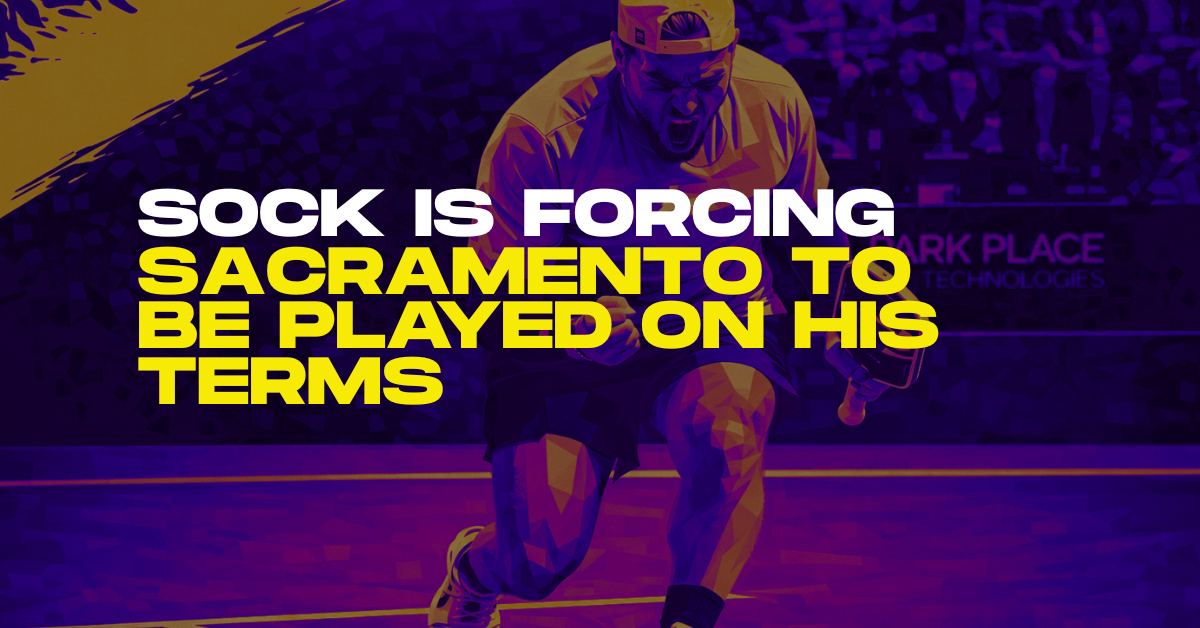
Jack Sock has reached the semi-finals in both singles and doubles at the Sacramento Open, but the bigger shift is how he is getting there, and how little control opponents seem to have over it.
- Sock has reached the semi-finals in both singles and doubles in Sacramento
- His ability to build solid rallies before accelerating them is disrupting standard match patterns
- The semi-finals now hinge on whether anyone can take the conditions of the match back from him
Not Just Through, But Dictating
Jack Sock is in two semi-finals in Sacramento.
More importantly, he is deciding how those matches are being played.
His route into the final four has cut across the expected structure of the draw. In singles, he knocked out top seed Chris Haworth. In doubles, he and Pablo Tellez recovered from a first-game loss to beat a higher-seeded team and move through.
The results matter, but they are not the defining feature.
The pattern is.
Matches involving Sock are not settling into the shape opponents want. They are being dragged into a different rhythm, one where stability lasts only until he decides otherwise.
Pickleball 101 First, Then Pressure
Sock described his approach as “backyard pickleball”. The phrase sounds loose. The reality is not.
The first layer is the basic stuff. The pickleball 101 stuff. Hold position. Stay balanced. Keep the dink solid. Reset cleanly enough to remove pressure. Do the simple things well enough that the rally becomes neutral.
That is the part that gives him permission to change the match.
Once the exchange is stable, Sock speeds it up. He attacks balls that many players would still work. He steps into hands battles early. He shortens points on purpose, often trying to end them in three or four shots rather than letting them stretch out.
That changes the problem for the other side.
Opponents are not just dealing with pace. They are dealing with disruption that arrives from a balanced position and at a moment Sock has chosen.
In doubles, that shows up in controlled positioning at the kitchen before the speed-up arrives. In singles, it appears in tempo changes that deny rhythm before it ever settles.
The order matters.
It is not chaos first. It is control first, then pressure.
If you’re following how the global game is shifting week by week, the World Pickleball Report breaks this down every Wednesday.
The Semi-Final Problem
That now defines the next stage of the tournament.
In singles, Sock faces Zane Ford, who arrives in the semi-finals with an opening in front of him. What Ford does not get is a straightforward match to play. If Sock controls when the rally speeds up, Ford has to do more than execute. He has to impose order on a match that resists it.
In doubles, Sock and Tellez face CJ Klinger and JW Johnson, a pairing that has moved through the draw with efficiency and control. That makes the contrast clear. One side wants to accelerate and force reactions. The other is better built to absorb, settle and redirect.
Whichever side dictates the pace will probably dictate the match.
For readers tracking the wider Sacramento story, this sits alongside our coverage of Sock’s quarter-final run in Sacramento and the tournament disruption caused when Hunter Johnson was disqualified in the men’s singles draw.
Why It Matters Now
Sacramento has reached the point where rankings are no longer enough to explain what is happening.
The semi-finals will not be decided simply by who is supposed to win. They will be decided by who gets to choose the terms of the match.
Right now, Sock is setting those conditions because he has earned the right to.
For official tournament context, the PPA Tour remains the best reference point for the event structure and draw progression.
The semi-finals are no longer being played on the tour’s terms. They are being played on his terms, because he is choosing when the match speeds up.
For a clearer view of where the sport is heading each week, you can join the World Pickleball Report here.
Further Reading
- Latest pickleball news from around the world
- Tournament coverage and results
- Rankings and player profiles
- Regional pickleball coverage
Chris Beaumont is the founder and Editor-in-Chief of World Pickleball Magazine. Chris follows the global game closely, reporting on the latest news, developments, stories and tournaments from all five continents. He also hosts the World Pickleball Podcast, interviewing people at all levels of pickleball. Chris is also an avid player, currently struggling to make the breakthrough from 4.0 to 4.5.