
Enjoying our coverage?
The March 2026 issue of World Pickleball Magazine is now live, featuring global league developments, tournament analysis, exclusive interviews, and stories from across the international pickleball community.
Follow @worldpickleballmagazine on Facebook and Instagram for daily pickleball news, and listen to the World Pickleball Podcast on Spotify, iTunes, and other major podcast platforms.
The results are starting to show it. The reasons sit deeper, and they are not going away.
Key takeaways
- More full-time players are raising the baseline level.
- Younger players are arriving ready, not developing slowly.
- Upsets and longer matches are no longer isolated moments.
The results are easy to see.
Upsets. Longer matches. Top seeds pushed earlier than expected.
What is less obvious is why it is happening.
Because this is not a run of results. It is a shift.
The first shift is volume.
More players are now training full-time, not part-time. That changes the baseline level of the tour. What used to be a gap in preparation has narrowed into a gap measured in small margins.
And small margins decide matches.
You are seeing that already across recent tournament draws.
At the Greater Zion Cup, top seed Hunter Johnson was knocked out in the Round of 32. Soon after, Connor Garnett followed. Two results, close together, but they pointed in the same direction.
The gap is no longer stable.
The second shift is exposure.
Players are no longer developing in isolation. They are facing stronger opposition earlier, more often, and in more demanding environments. That accelerates decision-making under pressure.
That is why repeat matchups are starting to matter.
Tama Shimabukuro has now beaten Garnett in consecutive tournaments, including the Texas Open and again in Utah.
That is not a surprise result anymore. It is a developing pattern.
And patterns are what change rankings.
The third shift is age.
Players like Shimabukuro are not arriving cautiously. They are arriving ready.
Technically sharp. Tactically clear. Comfortable under pressure.
They are not learning the level. They are entering at it.
That removes the adjustment period that once protected established players.
This is what it creates.
Compression.
The top tier still exists. But the space beneath it is tightening, and it is tightening quickly.
You can see it across the draw.
Lower-seeded teams are extending matches into deciding games. New partnerships are pushing established duos deeper into rallies. Even when favourites win, they are working harder to do it.
The result is not chaos.
It is pressure.
Margins
Professional pickleball is no longer building towards competition. It is already there.
The structure is in place. The players are better prepared. The margins are smaller.
This is what mature sports look like, and it is becoming one of the clearest themes in the current pro pickleball landscape.
What this means
For the top players, the job has changed.
Early rounds are no longer about settling in. They demand full focus from the first point. Matches take more out of you, earlier in the week.
That changes everything.
Energy, recovery, and decision-making are now as important as shot-making.
And over the course of a tournament, that adds up.
Stay ahead of the global game by signing up for the World Pickleball Report and getting the biggest stories delivered straight to your inbox.
The hierarchy still stands.
The space beneath it does not.
Further Reading
- Latest pickleball news from around the world
- Tournament coverage and results
- Rankings and player profiles
- Regional pickleball coverage
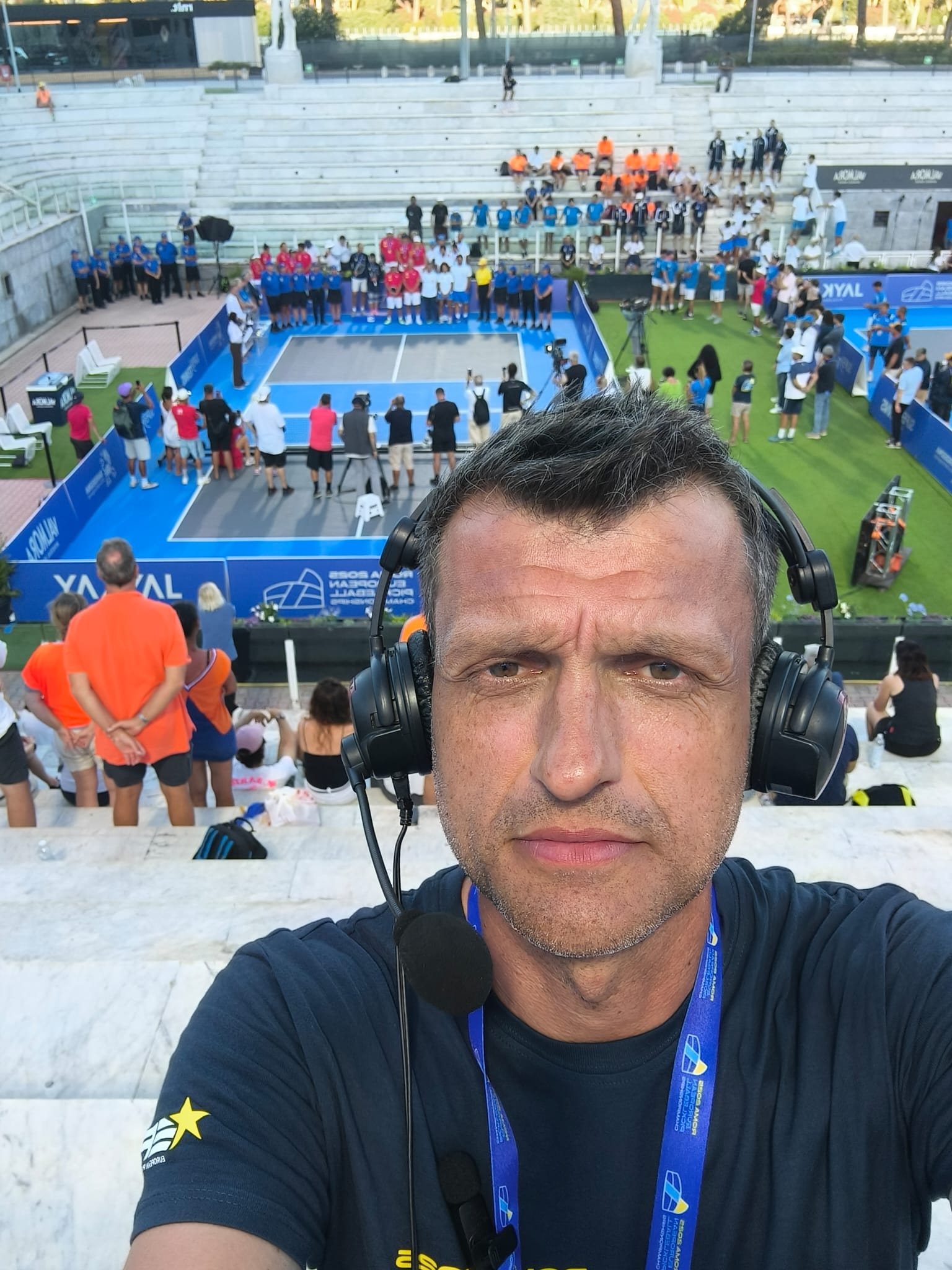
Chris Beaumont is the founder and Editor-in-Chief of World Pickleball Magazine. Chris follows the global game closely, reporting on the latest news, developments, stories and tournaments from all five continents. He also hosts the World Pickleball Podcast, interviewing people at all levels of pickleball. Chris is also an avid player, currently struggling to make the breakthrough from 4.0 to 4.5.