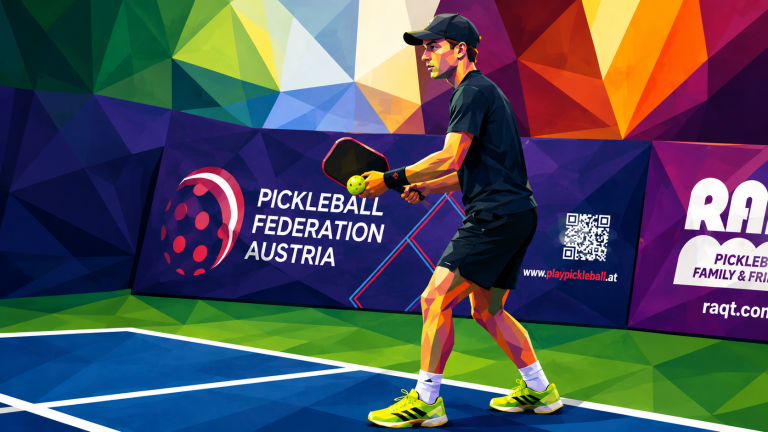

Pickleball at 9–9: Why UK Players Play It Safe When It Matters Most
At 9–9, the court can feel smaller. The net feels higher. The ball arrives quicker. In UK club play, that moment often triggers the same pattern: a safe dink, a cautious drop, a rally that drifts into “don’t miss” territory.
The problem is not that patience is bad. It is that “safe” often becomes passive, and passive tends to invite pressure. At 9–9, the teams who keep their nerve usually do one thing well: they stay clear on what they are trying to achieve on the next two shots.
This article breaks down why UK players tighten up at 9–9, what “playing safe” really looks like in pickleball, and how to build a repeatable point plan that holds up when the score turns sharp. If you want a wider foundation first, start with Learn Pickleball and the rules-and-basics guide on what pickleball is.
Why 9–9 changes players
At 9–9, the brain starts negotiating with itself. You are no longer playing “this point”, you are playing the idea of winning. That shift usually creates three behaviours:
- Shot selection narrows. Players avoid speed-ups, wider angles, and deeper targets, even when the opportunity is clear.
- Feet get quieter. The body stops adjusting. You reach instead of moving, and your contact point drifts behind you.
- Communication drops. Partners stop calling “mine” early, stop naming targets, and start hoping.
None of this is a character flaw. It is normal under stress. The fix is to give your brain a job it can complete, rather than a result it cannot control.
What “playing safe” really means in pickleball
In UK matches, “playing safe” usually means one of the following:
- Floating the return. A gentle return that lands short, letting the other team step in and dictate the third shot.
- Dropping without intention. A drop that lands in, but sits up, because you have not committed to shape, height, or depth.
- Cross-court dinking forever. A pattern that feels steady, until one ball sits up and you are forced into a late, awkward defence.
Safety is not the enemy. Unclear safety is. A “safe” choice is only safe if it reduces risk and improves your position. If it just delays the moment, it often increases the eventual risk.
The UK club factor: why caution feels polite
There is a specific UK club dynamic at 9–9. In many social ladders and mixed groups, players are conditioned to keep rallies friendly. That habit can follow you into competitive settings. You can see it in the way people avoid driving at the body, avoid sharp angles, or hesitate on a speed-up that would be routine at 7–3.
If this sounds familiar, you will probably enjoy your related piece on social pressure: Do UK Pickleball Players Hold Back Against Friends? (it connects directly to what happens at 9–9).
A simple 9–9 point plan: next two shots, not the whole point
The best way to steady the mind is to shrink the task. At 9–9, plan the next two shots only. Here are three point plans that work at UK club level and still scale up:
- Plan A: Return deep, earn the kitchen. Hit a deeper return and commit to a controlled third-shot drop (or drive-drop) to get level at the line.
- Plan B: Middle-first pressure. Aim your first neutral ball through the middle to remove angles and force a decision between partners.
- Plan C: Attack the “green light” only. Dink with shape until you see a ball above net height, then speed-up with intention (target, height, direction).
If you are losing leads before you even reach 9–9, your complacency pattern is probably the issue. Read The Mid-Game Trap next and you will see the same mental shift earlier in the game.
What to do when you feel yourself tightening
Here is the quickest reset that does not require a sports-psychology seminar:
- Breathe out on contact. Not a big theatrical breath. Just make sure you are not holding air when you hit.
- Move your feet before the swing. One adjustment step buys you a cleaner contact point and stops “arm shots”.
- Name the target early. Say “middle” or “backhand” to yourself or your partner before the ball arrives.
Pressure makes people reach for “safe”. A better goal is “clear”. Clear target, clear height, clear shape.
Try this next session: the 9–9 Pressure Ladder
- Set-up: Play first to 11, win by 2. Start every game at 9–9.
- Rule 1: Server must call a simple plan out loud: “middle”, “deep”, or “green light”.
- Rule 2: If you lose the point, you switch servers but stay at 9–9.
- Goal: Build comfort with repetition so 9–9 stops feeling special.
Common 9–9 mistakes that gift points
These are the errors that show up most often in UK club matches at 9–9:
- Short return + slow feet. The other team steps in and you are defending immediately.
- Two players retreating together. You open angles and lose the line. If that’s your pattern, read The Two Back Mistake.
- Letting borderline balls play you. You swing at balls you should leave, because you do not trust the call. That is fixable with a clear rule-set, covered in why UK 3.0 players struggle to let balls go.
FAQs
Should I avoid speeding up at 9–9?
No. You should avoid speeding up without a “green light”. If the ball is above net height and you can hit with shape to a clear target, it is often safer to attack than to push another neutral dink.
What is the safest target under pressure?
For most UK club players, the middle is the safest pressure target because it reduces angles and forces the opponents to decide who takes the ball.
Why do I miss easy shots at 9–9?
Because you stop moving your feet and your contact point drifts. Most “choke” misses are footwork and breathing problems wearing a mental mask.
How do I stop thinking about the score?
You do not “stop”. You replace it. Give yourself one job: the next two shots. Target and height, then move.
Does starting games at 9–9 really help?
Yes. It removes novelty. Pressure is often a lack of exposure. Repetition makes the moment familiar.
Further Reading
- Learn Pickleball
- What Is Pickleball? Rules, scoring, and basics
- The Mid-Game Trap: How UK Pickleball Players Lose Leads
- Why UK Pickleball Players Start Cold
- Why 3.0 Players Struggle to Let Balls Go
- The Two Back Mistake in UK Pickleball

Chris Beaumont
Founder and Editor-in-ChiefChris Beaumont is the founder and Editor-in-Chief of World Pickleball Magazine. Chris follows the global game closely, reporting on the latest news, developments, stories and tournaments from all five continents. He also hosts the World Pickleball Podcast, interviewing people at…
View All Articles →