
Progress in pickleball rarely moves in a straight line. For a lot of players, the most confusing stage is the one where you finally decide to improve and your game promptly falls apart. Shots that used to land now sail long. Dinks clip the tape. Your timing feels late. Matches that once felt comfortable turn into a grind.
It feels like you’re going backwards, but most of the time it is the opposite. That short-term dip is what improvement looks like when you are changing real habits, not just repeating what already feels safe.
If you are newer to the sport, start with the basics here: What is pickleball? Rules, scoring, court size, and how to start. Then come back to this article when the “why am I worse?” phase hits, because it usually does.
The hidden cost of changing something
When you introduce a technical or tactical change, you interrupt a pattern that your body has been running on autopilot. That pattern might not be efficient, but it is familiar. Familiar feels reliable, even when it is limiting you.
In this transition window, the old habit is fading, but the new habit is not stable yet. You end up in a weird middle space where you know what you are trying to do, but you cannot do it under pressure. That is why it feels like your level has dropped overnight.
Why it feels like regression
1) You are replacing muscle memory
At 3.0 and early 3.5, a lot of your game is built on timing that “kind of works.” When you change your grip, your contact point, or your footwork, you are rewriting the timing code. That takes repetitions, and while it is loading, your execution gets noisy.
Common example: you finally commit to a softer third shot or a slower reset, but your hands still want to punch the ball. The result is a floaty drop that sits up or a ball that drifts long.
2) Your brain is overloaded
When a skill is not automatic yet, your brain tries to manage too many things at once. Paddle angle. Feet. Shoulder turn. Where your partner is. Where the opponents are. What spin is coming. At beginner and improver level, that mental load slows your reactions and makes you late on simple balls.
This is why you can look great in drilling, then feel like you have “forgotten how to play” in games.
3) Your rhythm gets disrupted
Even small mechanical adjustments change the feel of the ball off your paddle. A slightly different grip pressure or contact point can make your dink jump higher or your block pop up. While your body adapts, your rhythm disappears and you start steering shots.
4) You are noticing more mistakes
Once you care about improving, you start seeing what you used to ignore. That is good, but it can also make you tense. Tension makes touch worse, which makes you feel even more frustrated. It becomes a loop unless you learn to stay calm inside it.
Signs you are in the “getting worse before better” phase
- Your third shot drops either fall short or float long, even though you understand the idea.
- Your dinks feel less “shaped” and more like hopeful taps.
- You hesitate in hands battles because you are thinking about mechanics.
- You leave rallies feeling mentally tired, even when the match is not intense.
- You keep saying, “I was better last month.”
None of these are proof that the change is wrong. They are usually proof that you are finally changing something that matters.
What to do instead of panicking
1) Measure the right thing for two weeks
For improvers, the quickest way to quit too early is measuring success by wins. For the next two weeks, measure this instead:
- Did I choose the smarter shot more often, even when it didn’t work perfectly?
- Did I attempt the new habit under pressure at least five times per game?
- Did I stay emotionally neutral after mistakes?
If the answer is yes, you are improving, even if the scoreboard is messy.
2) Change one thing at a time
If you try to fix your serve, your drop, your dink mechanics, and your positioning in the same week, you will overload yourself and stay in the slump longer.
Pick one priority. Common best-first picks at 3.0–3.5 are:
- Making your third shot drop simpler and higher percentage.
- Improving your ability to absorb pace with a calmer reset.
- Cleaning up your ready position and split step so you stop reaching.
If you want a clean foundation reference, keep this bookmarked and work outward from it: the complete beginner guide to pickleball.
3) Keep playing games, but give yourself constraints
Do not retreat into drills only. Match play is where the new habit becomes real. Instead, use a simple constraint in rec play, like:
- Every third shot must be a drop, no matter what.
- Every block must be soft to the kitchen, not punched back.
- On the first four dinks of every rally, you do not speed up.
Constraints make learning faster because they force repetitions under pressure.
4) Use video once a week
At this stage, your “feel” is unreliable. A quick phone video from the sideline will show you whether the change is actually happening. It also gives you proof that the process is working, even before results catch up.
5) Expect the dip, and plan for it
The worst version of this phase is when you think something has gone wrong. The best version is when you expect a two-week wobble and you stay patient through it. You do not need hype. You need repetitions.
What happens on the other side
Once the new habit settles, your game becomes calmer. You stop forcing shots. Your touch becomes repeatable. Your decisions speed up because you are not debating every option. You also gain a useful kind of confidence, the quiet type that comes from knowing you can rebuild your game when something stops working.
That is how players break through 3.5 ceilings. Not by finding a magic tip, but by staying in the uncomfortable middle long enough for the new version of their game to become normal.
Continue learning
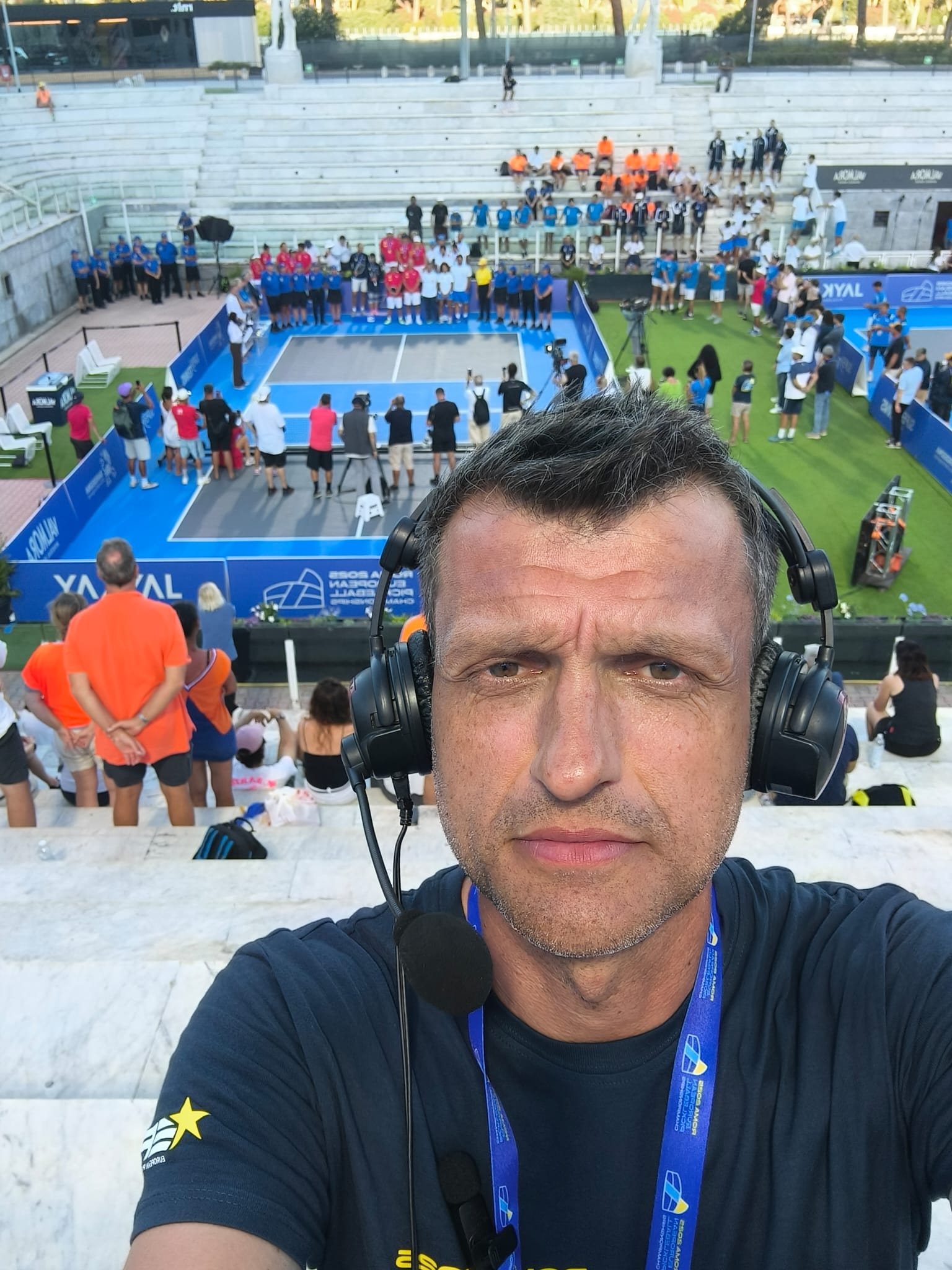
Chris Beaumont is the founder and Editor-in-Chief of World Pickleball Magazine. Chris follows the global game closely, reporting on the latest news, developments, stories and tournaments from all five continents. He also hosts the World Pickleball Podcast, interviewing people at all levels of pickleball. Chris is also an avid player, currently struggling to make the breakthrough from 4.0 to 4.5.