

BY CHRIS BEAUMONT, EDITOR-IN-CHIEF
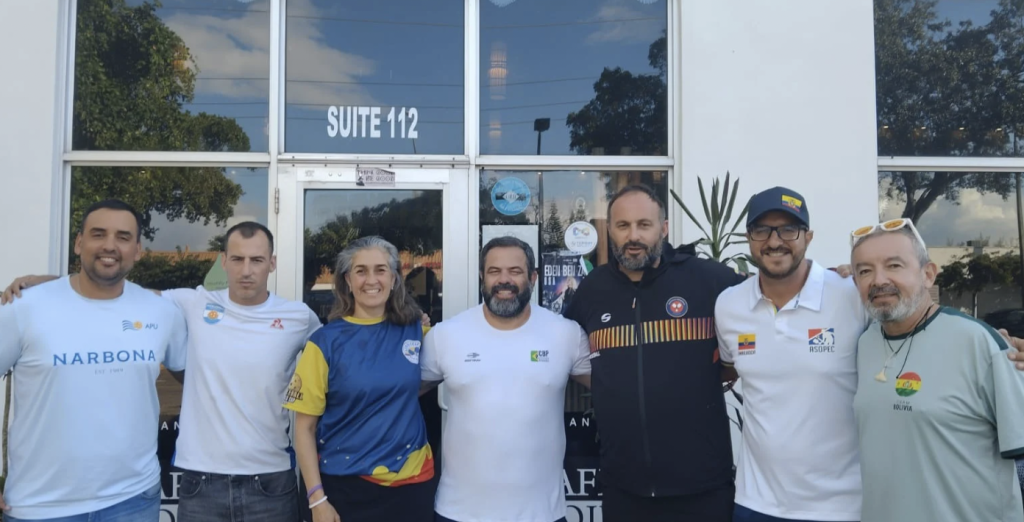
In the history of global sport, there is a romantic archetype of the British pioneer: the traveller who packs a ball in their rucksack, lands in a foreign country, and introduces a game that the locals eventually master better than the inventor. In a recent episode of the World Pickleball Podcast, we sat down with a man fitting that description perfectly: Leon Stanga, the President of Pickleball Venezuela.
A native of Bedford, England, Stanga moved to Caracas in 2014, originally working in property and recycling. However, it was a trip to New York that changed his trajectory—and the sporting landscape of Venezuela—forever. Like many of us, his introduction to pickleball involved a bruised ego; he was soundly beaten by his wife’s 71-year-old aunt on a converted tennis court.
“Started off with my ego being broken,” Stanga admitted, but he immediately recognised the potential for the sport in Venezuela, a country with a strong racquet sport culture due to its climate.
From “The Wild West” to World Beaters
Stanga brought the first paddles to Venezuela in 2021, securing initial support from Selkirk to help equip schools and individuals. What started as a “door-to-door” effort demonstrating the game on badminton courts has exploded into a national phenomenon.
In less than five years, the growth has been staggering. Venezuela now boasts over 220 courts across 14 states, with an estimated player base of 3,000 to 4,000. Perhaps most surprisingly, the infrastructure is not makeshift; Stanga notes that 90 to 95% of these facilities are dedicated pickleball complexes, funded by millions in private investment.
This infrastructure underpinned Venezuela’s stunning performance at the recent Pickleball World Cup. The Venezuelan delegation secured the most medals of any country collectively. The highlight was the junior team, aged 14 to 17, who finished second in the world. They defeated powerhouses like Canada, Puerto Rico, and China, eventually whitewashing the latter in a tiebreaker.
“It was like the underdog story,” Stanga recalled, describing the electric atmosphere where the adult team also pushed the USA to a tight 3-2 finish.
A Social Lifeline
While the medals are impressive, Stanga is most proud of the sport’s social impact. While pay-to-play courts exist for the middle class, the sport has taken deep root in the barrios (neighbourhoods), where free courts are played on 24/7.
In an economy where jobs can be scarce, pickleball has created a new industry. “We’ve created a new sport in a new country… created jobs where there aren’t any,” Stanga explained. From coaching certifications to running shops, the sport is putting food on tables. Stanga shared moving stories of individuals finding a community after personal tragedies and coaches finding a sense of self-worth.
“I don’t need a gold medal,” Stanga said. “I like to see people surviving through the sport as well”.
Unifying a Continent
Stanga’s ambition extends beyond Venezuela’s borders. Recognising that the region needed structure to avoid remaining the “wild wild west,” he recently spearheaded the launch of the South American Federation. This new body aims to standardise rankings, organise continental games, and present a unified front to global sponsors.
“You can’t have them winning a thousand points in another [league] because you’re never going to know,” Stanga noted, emphasising the need for harmony and a unified league system across the continent.
The Year of the Junior
Looking ahead to 2026, Stanga has declared it “the year of the juniors”. Following their World Cup success, the focus is now on securing scholarships for young Venezuelan talent to attend colleges in the United States.
“That is the next thing coming,” Stanga said, highlighting recent meetings with DUPR regarding scholarship opportunities.
From a single net on a badminton court to a World Cup powerhouse, Leon Stanga’s journey is a testament to what happens when passion meets organisation. As he puts it, “I’m not looking for a statue in Venezuela… my biggest achievement here is seeing people being able to feed their families through pickleball”.
You can listen to the full interview with Leon Stanga on the World Pickleball Podcast.
If you enjoyed this article, you can download the whole beautifully designed magazine here.