PickleballPros.com brings top touring professionals to your local courts, delivering unforgettable clinics, exhibitions, and experiences where players don’t just watch the pros, they learn from and compete alongside them. Follow @thepickleballpros or submit a Request a Pro form to bring a world-class pickleball experience to your facility.
By Lina Padegimaite
Why are more and more top players switching to a two-handed backhand — and what does it unlock that a traditional one doesn’t?
In this month’s issue, Lina Padegimaite breaks down the shot that is quietly reshaping how points are won at the highest level — and how you can start using it immediately.
“If your third shot floats, your opponent attacks. If it dips with topspin, they react.”
I want to break down one of my most reliable shots — the two-handed backhand, or what a lot of players call the “twoey.”
If you’ve been watching high-level pickleball lately, you’ve probably noticed this shot becoming more common. That’s not by chance. It’s not just style — it’s a tool to apply pressure early and take control before your opponent settles into the point.
Why You Should Add the Two-Handed Backhand
Let’s start with the “why.”
The biggest advantage, especially on your third shot, is pressure. A topspin two-handed backhand allows you to:
- Drive the ball with more consistency
- Control depth more effectively
- Vary pace without losing shape
- Make your opponent’s fourth shot much more difficult
That last point matters.
If your third shot floats, your opponent attacks.
If it dips and drives with topspin, they react.
That’s how you get to the kitchen on your terms.
What Makes the “Twoey” So Effective
The strength of this shot is stability and shape.
With two hands on the paddle, you naturally get:
- More control through contact
- A more connected swing
- Better topspin without overusing your wrist
That topspin gives you confidence to swing freely while still bringing the ball down into the court.
It also gives you options:
- Roll crosscourt with margin
- Drive deep to push opponents back
- Change speed without changing your swing
That versatility is what separates good players from great ones.
The Key Technique Concepts
1) Low to High Swing Path
You need a low-to-high motion. Get under the ball and brush up to create topspin. This is non-negotiable.
2) Use Your Body, Not Your Wrist
One of the biggest mistakes is getting too wristy.
The power comes from your shoulders and upper body working together. Think of your shoulders as the hinge. Your arms and paddle move with your body, not independently.
3) Get Low With Your Legs
Your legs create the shot.
Bend your knees, lower your centre of gravity, and let your positioning give you the right contact point. If you stay upright, you’ll compensate with your hands.
4) Paddle Path Matters More Than Position
There’s variation among pros, but the key is consistent: the swing path stays low to high. That’s what creates shape and control.
How to Learn the Two-Handed Backhand
If you come from tennis, this may feel natural. If not, that’s completely normal.
Step 1: Train Your Non-Dominant Hand
Start by hitting with your non-dominant hand only. This builds feel and control.
Step 2: Add the Second Hand
Bring your dominant hand back onto the paddle. Your non-dominant hand sits above it.
Now you’re building the full motion.
Step 3: Focus on Motion, Not Power
At first, forget power.
Focus on:
- Clean contact
- Low-to-high swing
- Staying connected
The pace will come later.
Where to Use It
This shot is most effective in:
- Third-shot drives
- Passing shots
- Baseline and midcourt counters
It lets you stay aggressive without losing control.
This Month’s Challenge
If you’re adding this to your game:
- Start with your non-dominant hand
- Build the motion slowly
- Use your legs and shoulders
- Prioritise consistency
The goal isn’t one perfect shot.
It’s a repeatable one you trust under pressure.
The two-handed backhand is one of the fastest ways to modernise your game and take control of points earlier.
Stick with it, keep it simple, and let the topspin do the work.
And if you watch closely, you’ll start to see just how often that early pressure decides the point long before it ends.
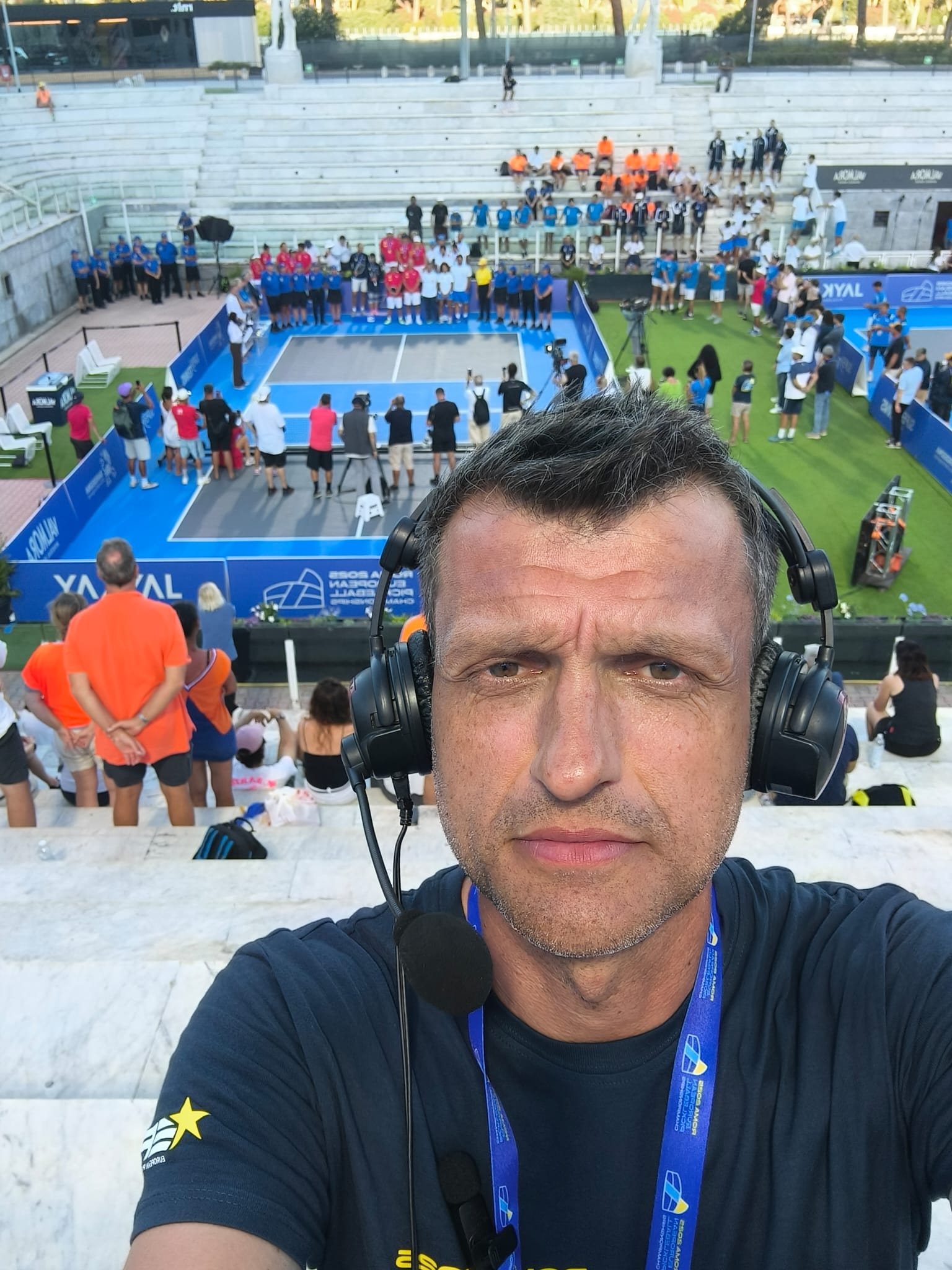
Chris Beaumont is the founder and Editor-in-Chief of World Pickleball Magazine. Chris follows the global game closely, reporting on the latest news, developments, stories and tournaments from all five continents. He also hosts the World Pickleball Podcast, interviewing people at all levels of pickleball. Chris is also an avid player, currently struggling to make the breakthrough from 4.0 to 4.5.