
Tours, brands, and players are colliding across the region—and in the process, redefining what global pickleball actually looks like.
There comes a point where a region stops being called “the future.”
It starts shaping the present.
That point has arrived in Asia.
Across a matter of weeks, the sport has moved through Vietnam, Malaysia, Japan, and Cambodia with a level of activity that no longer feels exploratory. Tours are arriving with intent. Brands are competing for position. Local ecosystems are no longer forming—they are accelerating.
What once looked like expansion now looks like redistribution.
Pickleball is no longer centred in one place.
The Structure Arrives: PPA Asia Sets the Terms
The clearest signal of that shift is structural.
The arrival of the PPA Tour into Asia—beginning with events such as the Hanoi Cup and extending toward future anchor stops like Tokyo—does not simply add tournaments to the calendar. It introduces a system.
Ranking points. Defined pathways. Controlled environments.
It brings clarity, but it also brings tension.
Because Asia is not an empty market waiting to be organised. It is a region where the sport has already taken root—through open ecosystems, shared courts, and fluid competition structures.
That contrast is now visible.
The withdrawal of Vietnam’s leading player, Phuc Huynh, from the Hanoi Cup over concerns around exclusivity and draw structure is not an isolated incident. It is an early signal of something deeper.
“Who gets to shape the sport in a developing market—the system, or the community?”
That question will not be answered in one tournament.
But it is now unavoidable.
The Convergence Moment: Hanoi Changes the Scale
If structure defines the shift, Hanoi defines the scale.
The PPA Asia Hanoi Cup is not a regional event. It is a full convergence of the sport’s global elite—Ben Johns, Anna Leigh Waters, Federico Staksrud, Tyson McGuffin—arriving into a market that, until recently, existed outside that level of competition.
There are no soft entries here.
The draw is deep. The pressure starts early. The expectation is immediate.
And underneath it, something else is happening.
Local players are no longer just participating.
They are measuring themselves directly against the best in the world.
That changes everything.
A Parallel Reality: Japan Shows the Next Layer
While Hanoi establishes scale, Japan shows what comes next.
The APP’s debut in Tsu City was not about arrival—it was about integration.
Professional competition sat alongside amateur brackets, youth divisions, and community engagement. It was not built as a spectacle alone, but as a system that connects levels of the sport.
That matters.
Because it shows a model where growth is not just driven by elite visibility, but by participation feeding directly into structure.
Players like Sofia Sewing and Megan Fudge delivered at the top end, but the more important signal came underneath:
the ecosystem held together.
Japan is not asking how to start pickleball.
It is asking how to sustain it.
The Battle for Position: Brands Move In
Where structure and participation meet, brands follow.
And in Southeast Asia, they are no longer waiting.
Within the same week, Franklin and JOOLA launched parallel activations across Vietnam and Malaysia—two different approaches competing for the same outcome.
Franklin moved across communities, embedding itself into clubs, sessions, and local play.
JOOLA concentrated its impact into moments—stadiums, exhibitions, star power.
One builds volume.
The other builds aspiration.
Together, they accelerate both.
This is what a live market looks like.
Not theoretical growth.
Active competition.
The Foundation Layer: Cambodia and the Shape of Growth
Beneath the tours, the players, and the brands, another story is unfolding.
Cambodia.
No major tour. No global headlines. No immediate spotlight.
But one of the clearest models of how pickleball actually takes hold.
A federation built early, before fragmentation.
A community-first approach that prioritises inclusion over control.
A deliberate shift from expat-led growth toward localisation.
This is the layer most people miss.
Because while tours create visibility, ecosystems create permanence.
Cambodia is building permanence.
A New Player Map: The Game Is Spreading Faster Than Systems Can Contain It
At the same time, the player map is shifting.
Quang Duong.
Roos van Reek.
Harsh Mehta.
These are not isolated names.
They are signals.
The pipeline is no longer concentrated. It is distributed.
And that creates pressure on every structure trying to organise the sport.
Because the faster the game spreads, the harder it becomes to contain within a single system.
The Real Story: Asia Is Not Following the Sport — It Is Rewriting It
For years, the question was whether pickleball would become global.
That question has been answered.
The more important question now is:
what does global pickleball actually look like?
Asia is not copying the North American model.
It is challenging it.
Blending structure with openness.
Mixing grassroots with elite pathways.
Allowing different versions of the sport to exist at the same time.
That is not a weakness.
It is what real growth looks like.
“Asia is no longer where pickleball is going. It is where the sport is being decided.”
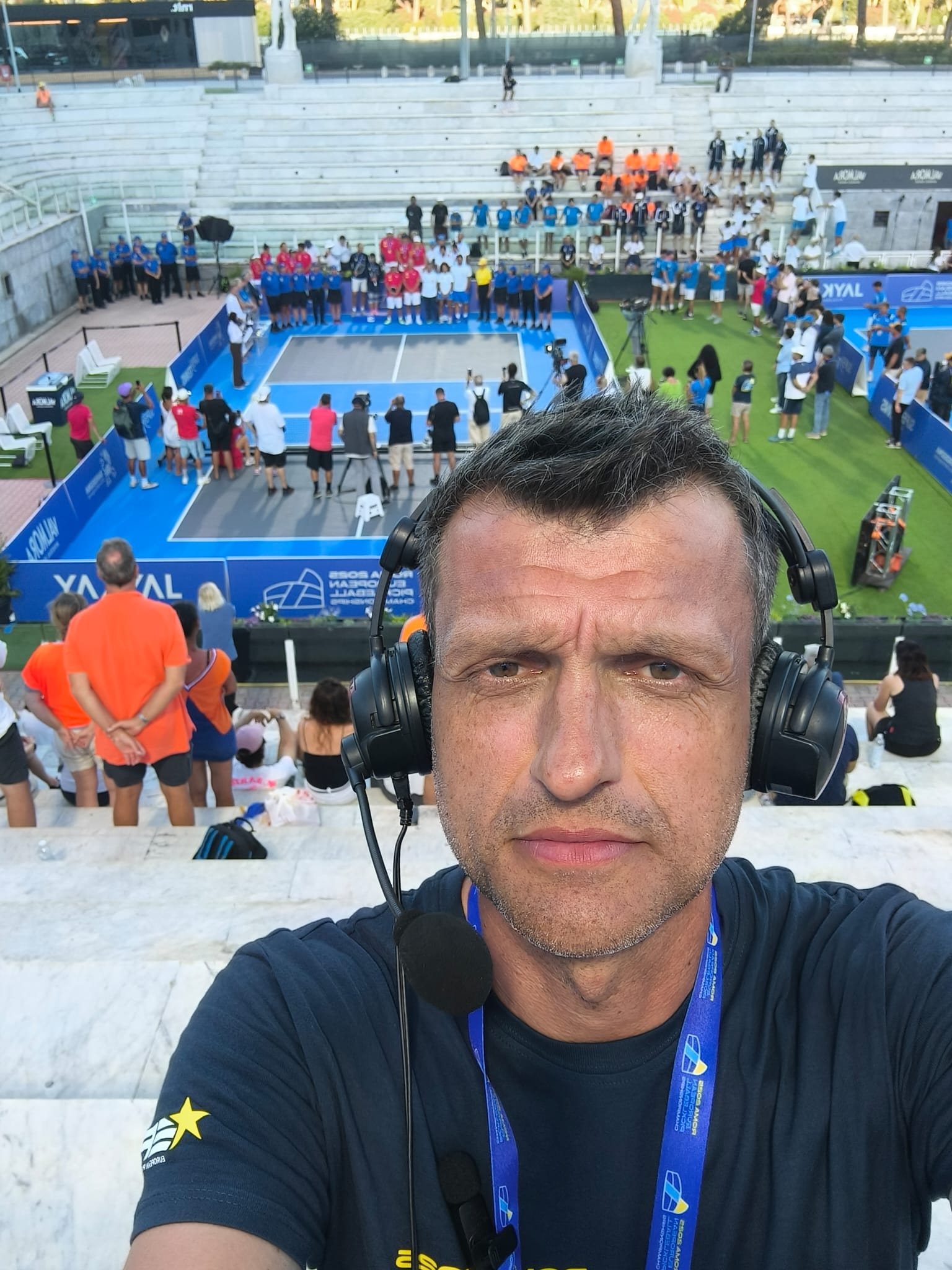
Chris Beaumont is the founder and Editor-in-Chief of World Pickleball Magazine. Chris follows the global game closely, reporting on the latest news, developments, stories and tournaments from all five continents. He also hosts the World Pickleball Podcast, interviewing people at all levels of pickleball. Chris is also an avid player, currently struggling to make the breakthrough from 4.0 to 4.5.