
Gran Canaria Open Initiates the 2026 Pickle Pro Tour Season in Spain
Enjoying our coverage?
The March 2026 issue of World Pickleball Magazine is now live, featuring global league developments, tournament analysis, exclusive interviews, and stories from across the international pickleball community.
Follow @worldpickleballmagazine on Facebook and Instagram for daily pickleball news, and listen to the World Pickleball Podcast on Spotify, iTunes, and other major podcast platforms.
The professional pickleball landscape in Europe continues its rapid structural evolution as the Royal Spanish Tennis Federation officially opens registrations for the Gran Canaria Open. Scheduled to take place from the seventeenth to the nineteenth of April 2026, this event marks the commencement of the official national circuit, the Pickle Pro Tour. The tournament will draw domestic and international athletes to Las Palmas de Gran Canaria, establishing a critical competitive benchmark for the European season.
This inaugural event of the 2026 calendar represents a significant institutional commitment to the sport within the Iberian Peninsula. Offering a substantial ten thousand euro prize purse, the tournament aims to attract elite competitors while simultaneously providing an accessible platform for amateur players across multiple skill divisions. The integration of high-stakes professional brackets alongside community-focused categories demonstrates a strategic approach to fostering holistic sporting growth.
For the international pickleball community, the successful execution of the Gran Canaria Open serves as a vital indicator of European market maturity. As the sport seeks global standardisation, the emergence of robust, professionally managed national tours outside of North America is essential. The Spanish federation’s investment in this circuit provides a necessary developmental pathway for European talent, ensuring the continent remains a formidable force in the global racket sports ecosystem.
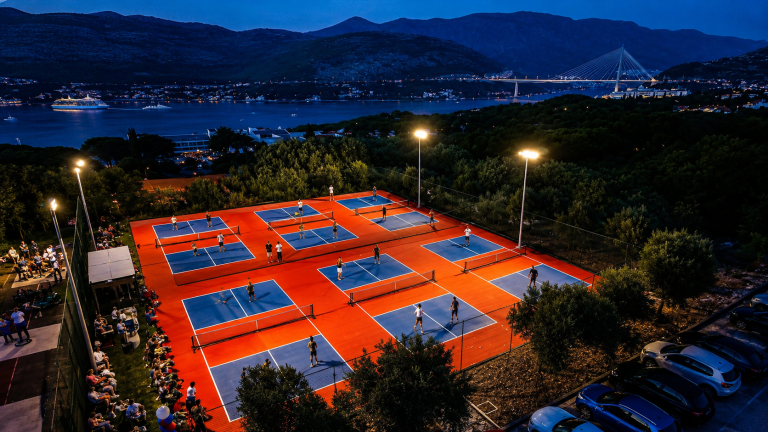
The structural execution of the Gran Canaria Open is designed to maximise both player experience and spectator engagement by employing a dual-venue strategy. The preliminary phases of the competition will be hosted at the Club Conde Jackson Tennis Las Palmas, a premier racket sports facility equipped to handle the high volume of group-stage matches. This venue will manage the extensive early-round scheduling across multiple courts, ensuring a seamless progression for the hundreds of anticipated participants.
As the tournament advances to its critical final stages, the operational focus will shift to a more public arena. A dedicated centre court will be constructed in the Plaza Alcalde Fernando Ortiz Wiot, situated in the heart of the city. This strategic relocation for the premier finals on Sunday, the nineteenth of April, is intended to bring the sport directly to the public, transforming the championship matches into a highly visible civic spectacle. This approach mirrors the successful promotional tactics often employed by international squash and padel tours.
The competitive format of the tournament introduces rigorous testing for the athletes. The event will commence with a round-robin group phase before transitioning into a direct elimination bracket. Matches will employ a rally scoring system played to twenty-one or twenty-two points, a format that demands relentless concentration, as every fault directly penalises the offending team. The semi-finals and finals will revert to the traditional best-of-three games format, ensuring that the ultimate champions demonstrate sustained tactical superiority.
Inclusivity remains a cornerstone of the event’s architecture. The tournament offers a diverse range of categories, including PRO divisions for the elite athletes, alongside 4.5 and 3.5 skill level brackets. Furthermore, dedicated age categories, such as the over-fifties and over-sixties divisions, highlight the sport’s unique cross-generational appeal. Competitors are permitted to register for up to three different events, a policy that guarantees an intensive and physically demanding weekend of continuous competition for those pursuing multiple medals.
What’s the Score?
The launch of the Gran Canaria Open confirms that the Spanish national circuit has officially transitioned from a developmental project into a legitimate, professionally governed enterprise. By securing substantial prize funds and employing innovative civic staging for its finals, the Pickle Pro Tour is actively constructing a commercially viable sporting product that commands the respect of the broader European athletic community.
Hit it Deeper!
Analysing the operational blueprint of the Gran Canaria Open reveals a highly sophisticated approach to sports marketing and civic integration. By intentionally moving the championship matches out of the traditional club environment and into a bustling public plaza, the organisers are breaking down the inherent barriers to entry that often restrict the growth of new sports. This high-visibility strategy ensures that the event captures the attention of passing pedestrians and casual observers, effectively converting public curiosity into active engagement and potential future participation.
Furthermore, the introduction of the rally scoring system during the preliminary stages is a tactical necessity that influences the technical approach of the athletes. Rally scoring dramatically accelerates the pace of the match and heavily penalises unforced errors, as the serving team does not possess a buffer against losing points. Players competing in Las Palmas will need to adopt highly disciplined, low-risk tactical frameworks during the group stages, prioritising consistency and placement over aggressive, high-risk shot-making. This formatting choice ensures that the athletes progressing to the finals are those who possess the highest degree of technical reliability.
From a continental perspective, the financial commitment demonstrated by the ten thousand euro prize purse is a critical milestone. To prevent the perpetual migration of top European talent to the North American professional circuits, national federations must provide domestic opportunities for financial sustainability. The Pickle Pro Tour is addressing this requirement directly, establishing a lucrative regional circuit that allows European professionals to earn a living, accumulate ranking points, and refine their skills without the necessity of transatlantic relocation. This domestic retention is absolutely vital for the long-term competitiveness of European national teams on the global stage.
The World Pickleball Magazine Verdict
The Gran Canaria Open is poised to set a formidable standard for national tour events across Europe in the 2026 season. The Spanish federation’s combination of significant financial incentives, diverse competitive categories, and public-facing championship venues reflects a deep understanding of modern sports administration.
As the Pickle Pro Tour embarks on this ambitious new calendar, the international community should view the Spanish model as a definitive blueprint for national development. The success of this circuit will undoubtedly accelerate the professionalisation of the sport across the continent, further solidifying Europe as a central pillar in the global expansion of pickleball.
For wider context around the sport’s continental growth, explore our latest pickleball news, follow the expanding calendar in tournament coverage, track the sport’s leading names through rankings and player profiles, and monitor the wider rise of the game across Europe.
Official event details and registration information are available through the Pickle Pro Tour Gran Canaria Open announcement and the Canary Islands Tennis Federation event page.
Stay ahead of the global game. Subscribe to the weekly World Pickleball Report newsletter for international news, tournament insights, and exclusive interviews delivered directly to your inbox.
Further Reading
- Latest global pickleball news
- International tournament coverage and schedules
- World rankings and player profiles
- Europe pickleball coverage and regional growth

Chris Beaumont
Founder and Editor-in-ChiefChris Beaumont is the founder and Editor-in-Chief of World Pickleball Magazine. Chris follows the global game closely, reporting on the latest news, developments, stories and tournaments from all five continents. He also hosts the World Pickleball Podcast, interviewing people at…
View All Articles →