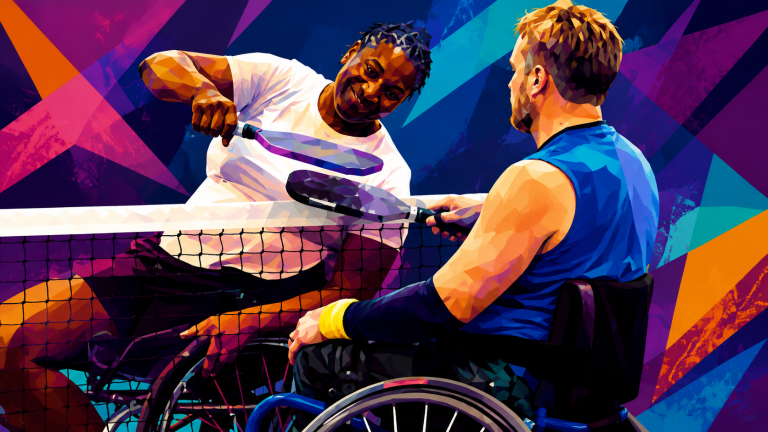

How Pickleball Can Help UK Schools Tackle Youth Inactivity and Obesity

Facebook
LinkedIn
WhatsApp
Pinterest
X

How UK Schools Can Use Pickleball to Combat Youth Inactivity and Obesity
Across England, concerns about rising levels of childhood inactivity and obesity are no longer confined to the margins of public health reports. They have become a central issue for educators, local authorities, and health professionals alike. In this context, schools are under growing pressure to find innovative ways to re-engage pupils with physical activity. One surprising contender has begun to gain attention: pickleball.

Originating in the United States, pickleball blends elements of tennis, badminton, and table tennis. It is simple to learn, requires minimal equipment, and is particularly well suited to school environments. For a country grappling with increasingly sedentary youth and stretched PE budgets, the game may offer both a strategic and scalable solution.

The Scale of the Problem
According to Sport England’s latest Active Lives Children and Young People Survey, just 47 percent of children aged 5 to 16 in England meet the Chief Medical Officer’s guideline of at least 60 minutes of moderate-to-vigorous activity per day. More worrying still, over 30 percent are considered ‘less active’, engaging in fewer than 30 minutes of daily activity.

This inactivity is strongly linked to rising obesity rates. The NHS National Child Measurement Programme reports that over one in five children in Year 6 are now classified as obese. Rates are even higher in deprived areas, where access to extracurricular sport is often limited.

Traditional school sports have struggled to reverse these trends. Football, rugby, and athletics remain core parts of the curriculum, but they do not suit every child. Competitive formats and early skill gaps can alienate those who lack confidence or physical ability. For many, PE becomes a source of anxiety rather than enjoyment.

Why Pickleball Works in a School Setting
Pickleball addresses several of the structural challenges that PE teachers face. It is inherently inclusive: the court is smaller than a tennis court, the paddle is light, and the ball travels at a manageable speed. Rallies are easier to sustain, meaning beginners can participate immediately, regardless of prior athletic ability.

For secondary schools pressed for time and resources, the game is logistically appealing. Courts can be taped out in multi-use halls, outdoor basketball spaces, or even in playgrounds. A full class can be engaged using only a few nets and a small number of paddles. Doubles play encourages teamwork and communication, making it suitable for both PE lessons and lunchtime clubs.

Because the game is low-impact, it appeals to a wider range of body types and fitness levels. Unlike some racquet sports, which require high mobility or endurance, pickleball supports sustained movement with fewer barriers. This is particularly important for children who are overweight or out of condition and need a gentle but active reintroduction to sport.

Implementation Examples in England
Some forward-thinking schools and local authorities have already begun integrating pickleball into their PE offerings. In Hertfordshire, a cluster of academies under the Diocese of St Albans Multi-Academy Trust introduced the sport in late 2023 as part of a pilot targeting Years 7 and 8. Early results showed a measurable increase in voluntary participation among pupils who had previously opted out of extra-curricular sport.

In West Yorkshire, Wakefield Council’s School Sports Partnership added pickleball to its annual School Games programme. PE coordinators cited the sport’s novelty and adaptability as key factors in engaging hard-to-reach pupils, especially in mixed-ability and SEND settings.

Further north, a secondary school in Gateshead used Sports Premium funding to purchase a set of portable nets and composite paddles. Within a term, teachers reported higher attendance in PE and improved social interaction among Year 9 pupils who had struggled with confidence in traditional team sports.

While national data on school-based pickleball is still limited, these examples suggest a pattern worth replicating.

Aligning with National Curriculum Goals
The National Curriculum for Physical Education in England is clear in its intentions: to develop competence, encourage sustained physical activity, and promote competitive and cooperative engagement. Pickleball supports all three.

It develops hand-eye coordination, spatial awareness, and tactical thinking. When taught progressively — starting with modified rules and building towards rallies and game scenarios — it offers a tangible sense of progression, which is often lacking in ad-hoc PE units.

Moreover, the game fosters social skills. As a doubles-based activity, it encourages turn-taking, communication, and teamwork. These are precisely the attributes Ofsted inspectors often seek when assessing the “personal development” and “behaviour and attitudes” elements of a school’s PE provision.

Tackling Obesity Through Engagement, Not Shame
Public health campaigns often fail because they focus on weight reduction as the primary goal. In contrast, pickleball supports a model of activity that is enjoyable, inclusive, and community-oriented. When students participate regularly, calorie expenditure increases naturally — but without the pressure or stigma that can accompany more intense exercise regimes.

Crucially, the sport lends itself to informal, pupil-led play. Once pupils know the rules and basic techniques, they can initiate games during breaktimes or after school. This type of spontaneous engagement is one of the most effective ways to increase daily activity levels in young people.

Schools that embed pickleball into both structured and unstructured parts of the day are more likely to see sustained results, particularly in pupils with low baseline activity levels.

Cost and Equipment: A Manageable Investment
One of the most compelling aspects of pickleball for school settings is the minimal upfront cost. A basic school set — including four paddles, a net, and balls — can be acquired for under £200. Many PE departments already have access to cones, markers, and lines that can be repurposed.

Portable nets are light and quick to assemble. Courts can be set up indoors or outdoors, allowing for year-round use. For schools with limited sports halls or competing facility demands, this flexibility is invaluable.

Some organisations, including Pickleball England, have begun offering taster sessions and starter kits for schools exploring the sport. These partnerships could become crucial as interest grows.

Building a Culture Beyond the Curriculum
To truly harness pickleball’s potential, schools will need to embed it not just in lessons but in the wider school culture. This could include:

Peer-led lunchtime clubs or mixed-year tournaments

Inter-school pickleball leagues supported by local School Games organisers

Integration into PSHE through themes like resilience, fair play, and wellbeing

Links with local leisure centres or adult pickleball clubs, creating pathways for family engagement

By making the sport visible and valued within the school community, educators can foster long-term behaviour change rather than short-term novelty.

A Timely Opportunity
As the Department for Education continues to advocate for at least 60 minutes of daily activity for children, schools will need scalable solutions that appeal across demographics. Pickleball offers just that — a sport with low barriers and high returns.

More than just a new racquet sport, it represents a shift in how physical activity can be reimagined for 21st-century pupils. If implemented thoughtfully, it could become a key tool in reversing the twin epidemics of youth inactivity and obesity — not with pressure, but with play.

Scroll to Top