
BY MARC CHUA, ASIA CORRESPONDENT

When the lights came on at 9Pickle in Setia Alam, it wasn’t just another pickleball tournament taking shape. It was a statement: pickleball in Malaysia had entered its entertainment era.
Held over 6–7 December 2025, the Pickleball Celebrity Slam 2025 transformed one of the country’s most vibrant pickleball venues into a full‑scale sporting spectacle—complete with celebrity team owners, broadcast coverage, and a festival‑like atmosphere that blurred the line between competition and showtime.
Presented by Panas Express and Astro, the event marked a pivotal moment for the sport locally, proving that pickleball could command prime-time attention without losing its inclusive, community-driven soul.
A Court Unlike Any Other
From the moment spectators stepped into 9Pickle, it was clear this was not business as usual.
Music filled the venue. Cameras tracked warm‑ups. Fans lined the courts, phones ready. Players—ranging from seasoned competitors to entertainers and former national athletes—shared the same space, exchanging laughs, nerves, and competitive glances.
The Celebrity Slam wasn’t designed to mimic a traditional tournament. Instead, it was curated as an experience—one that welcomed casual fans, first‑time viewers, and lifestyle audiences who might otherwise never step inside a pickleball venue.
And thanks to live broadcasts on Astro Arena (Channels 801/802), alongside streaming on Astro GO and sooka, the reach extended far beyond the venue walls.
Six Teams, Many Personalities
At the heart of the Slam were six celebrity‑led teams, each bringing its own fan base, personality, and narrative into the competition.
Team owners included a compelling mix of entertainment icons, entrepreneurs, and sporting legends:
- Datuk AC Mizal, entertainer and media personality
- Tan Boon Heong, former Malaysian badminton star
- Chan Peng Soon, former national badminton representative
- Azzim Zahid Azim (Meri), founder of Bulan Bintang
- Ashraf Anuar, founder of SVG Worldwide
- Vincent Siow, founder of Panas Express
Their involvement elevated the Slam beyond a novelty event. These were not symbolic figureheads—they were active participants, advocates, and bridges between pickleball and mainstream Malaysian culture.
Sharing the courts were familiar faces from entertainment and sport, including Adlin Aman Ramlie, Sharif Zero, Datuk Minarwan Nawawi, and former world badminton medalist Koo Kien Keat, whose transition from shuttlecock to pickleball paddle drew particular attention.
The Format: Built for Energy, Not Elimination
Competition unfolded across four categories—Men’s Doubles, Mixed Doubles, Open Doubles, and Singles—with formats designed to maximise engagement rather than endurance.
Shorter matches, dynamic pairings, and celebrity‑pro combinations ensured that no rally felt routine. Some points ended in laughter, others in surprising displays of skill, but every exchange fed the crowd’s energy.
It was pickleball stripped of stiffness and presented at its most watchable—fast, social, and reactive.
Broadcast, Buzz, and a Bigger Audience
The presence of Astro as broadcast partner was a turning point.
By bringing the Celebrity Slam onto national television and digital platforms, pickleball stepped into living rooms across Malaysia, reaching audiences who may never have encountered the sport before. Highlights and replays on Astro’s platforms ensured the event lived on well beyond the weekend itself.
For sponsors and partners, the Slam demonstrated pickleball’s potential as a commercially viable entertainment product—one that sits comfortably alongside lifestyle content, celebrity culture, and mainstream sports programming.
More Than Glamour: A Strategic Play for Growth
Behind the lights and laughter was a clear purpose.
The Celebrity Slam was conceived as a gateway—an event that lowers barriers, invites curiosity, and reframes pickleball as something approachable and fun. Watching celebrities learn, adapt, and compete in real time made the sport feel human and achievable.
For many spectators, the takeaway wasn’t who won a match—it was how playable pickleball looked.
And that relatability is powerful.
When Sport Becomes Social
Between matches, the courts remained alive.
Players mingled with fans. Photos were taken on the same courts where matches had just finished. Conversations flowed easily between athletes, celebrities, and newcomers asking how to get started.
This openness—this lack of distance between performer and audience—captured something essential about pickleball’s appeal in Malaysia: it thrives on connection.
Champions Crowned: Team All Star Takes the Title 🏆
Fittingly for an event built on spectacle and celebration, the inaugural Pickleball Celebrity Slam concluded with a clear winner.
Team All Star emerged as the champions of the first-ever Pickleball Celebrity Slam, capping off two days of high-energy matches with composure, chemistry, and crowd-pleasing performances. In a format that balanced entertainment with competition, Team All Star proved that showmanship and winning instincts are not mutually exclusive.
Their victory added a competitive anchor to the event’s celebratory atmosphere—ensuring the Slam would be remembered not only for its star power, but also for the standard of play it delivered.
A Blueprint for What Comes Next
The success of the Pickleball Celebrity Slam 2025 suggests a future where pickleball events are not confined to traditional competitive formats.
Elite tours, rankings, and professional pathways will continue to define the sport’s peak. But alongside them, events like the Celebrity Slam play a crucial complementary role—building culture, audience, and visibility.
At 9Pickle, over two nights in December, pickleball showed it could be competitive without being exclusive, glamorous without being distant, and entertaining without losing authenticity.
Sometimes, the fastest way to grow a sport isn’t to make it more serious.
It’s to make people want to be part of it.
If you enjoyed this article, you can download the whole beautifully designed magazine here.
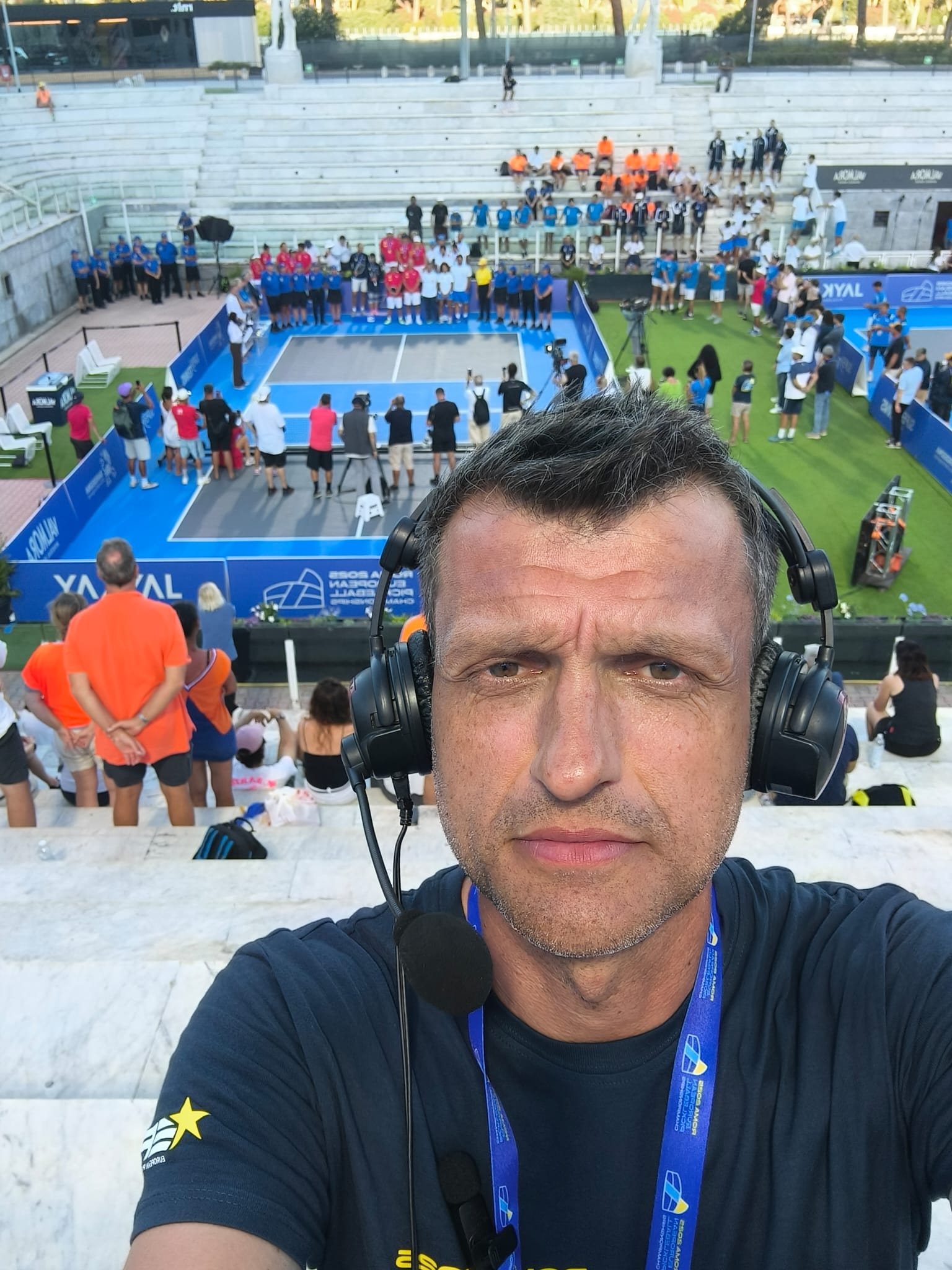
Chris Beaumont is the founder and Editor-in-Chief of World Pickleball Magazine. Chris follows the global game closely, reporting on the latest news, developments, stories and tournaments from all five continents. He also hosts the World Pickleball Podcast, interviewing people at all levels of pickleball. Chris is also an avid player, currently struggling to make the breakthrough from 4.0 to 4.5.